

Use & Care NotesLavender Plants
Sawyers Lavender: Blue-Gray Leaves and a Late-Summer Bloom
 Save
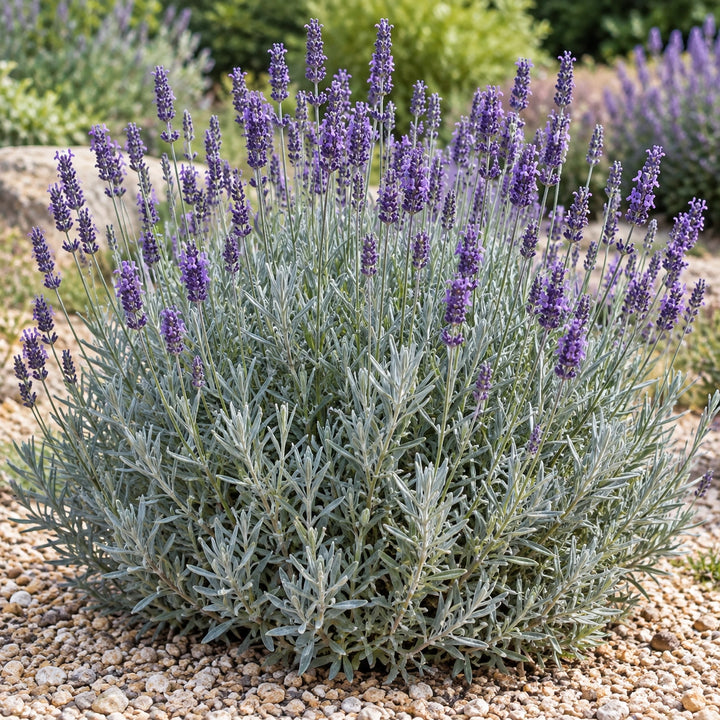
Sawyers lavender is a hybrid of English lavender and woolly lavender, Lavandula angustifolia × Lavandula lanata, and it shows both sides. From the woolly parent comes soft, blue-gray foliage; from the English parent, purple flower spikes with a sweet, floral-herbal scent. It forms a bushy, mounded plant about 18 inches tall and 24 inches wide and has received the Royal Horticultural Society's Award of Garden Merit.
Its real party trick is timing. Sawyers starts flowering in mid-July and peaks in mid-August.
Sawyers at a glance
| Trait | What to expect |
|---|---|
| Botanical name | Lavandula × chaytoriae 'Sawyers' |
| Parentage | English lavender × woolly lavender |
| Flower color | Purple |
| Foliage | Blue-gray |
| Habit | Bushy and mounded |
| Mature size | About 18 inches tall and 24 inches wide |
| Bloom | Starts mid-July, peaks mid-August, single flush |
| Hardiness | USDA zones 6a to 9b |
| Fragrance | Moderate; floral with sweet herbal notes |
Extending the lavender season
By August, most English lavenders have been cut back and are resting. Sawyers is just hitting its stride. Planting it alongside early and midseason cultivars stretches purple flowers and bee activity deep into late summer. Its blue-gray foliage also keeps the bed looking good in June, before it blooms, so it never sits there looking like a placeholder.
Pair it with late-summer companions that like the same dry, sunny conditions. The Bloom Calendar helps you plan a season-long sequence.
Site and soil
Gray, woolly-leaved lavenders want drier air and drier feet than English types. Give Sawyers full sun and the best drainage you have: a raised bed, a gentle slope, a gravel garden or a mound of grit-amended soil. Space plants so air moves freely around them, about two feet apart or a little more, and keep mulch away from the crown. Humid, wet stretches are harder on it than cold.
Care through the year
- Spring: wait until new growth shows, then trim any winter-damaged tips.
- Summer: water only during long dry spells once established.
- Late summer: enjoy the August peak, and cut stems for drying if you like.
- After bloom: shear spent stems and lightly shape the mound, staying out of bare wood. There is no listed rebloom.
- Winter: it is rated to zone 6a. In colder zones, a container you can shelter is the safer choice.
Uses for the flowers
Sawyers is rated good for fresh and dried flowers and great for pollinators. Its late flowers make it handy for late-summer bouquets and for drying after the main lavender harvest is done. Culinary use is not recommended.
Frequently asked questions
Why is my Sawyers not blooming in June?
That is normal. It is a late bloomer, starting in mid-July and peaking in mid-August.
Is Sawyers hardy in Michigan?
It is rated for zones 6a to 9b. In zone 6 with excellent drainage it has a good chance; in zone 5, grow it in a pot you can protect.
How is it different from Richard Gray?
Both are English × woolly lavender hybrids with silvery foliage. Sawyers blooms later, peaking in August, and is rated to zone 6a; Richard Gray blooms in mid-July and is rated from zone 7a.
















Share how it went in your field