

Use & Care NotesLavender Plants
Scottish Cottage Lavender: A Tidy Lavandin That Blooms Late
 Save
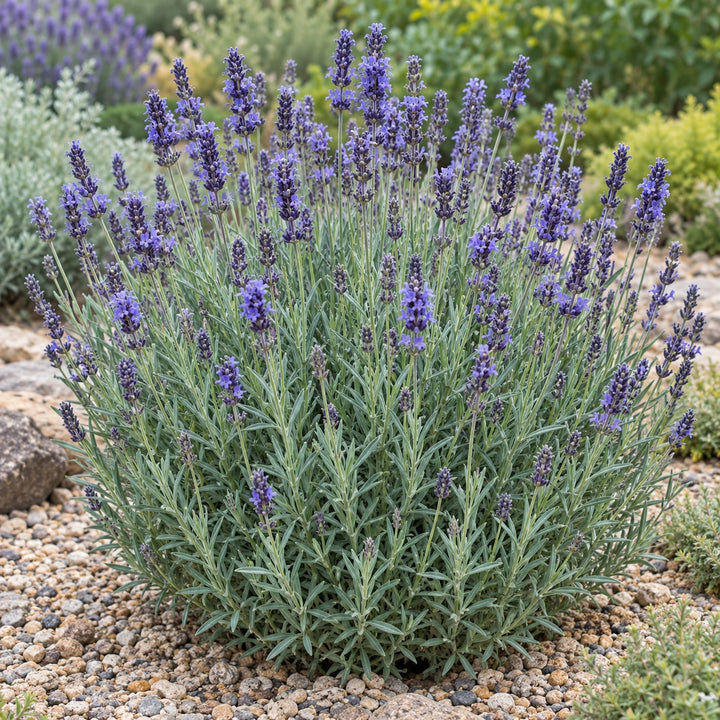
Scottish Cottage lavender is a lavandin with better manners than most. Where many lavandins grow into sprawling four-foot giants, this one stays tidy, compact and upright, about 24 inches tall and 36 inches wide. It has narrow, silver-toned blue-gray foliage, violet-blue flowers set off by dark purple calyces and a sweet, classic lavandin fragrance.
It also blooms late, peaking in mid-August, which makes it a great finisher.
Scottish Cottage at a glance
| Trait | What to expect |
|---|---|
| Botanical name | Lavandula × intermedia 'Scottish Cottage' |
| Parentage | English lavender × spike lavender |
| Flower color | Violet-blue with dark purple calyces |
| Foliage | Blue-gray, narrow and silver-toned |
| Habit | Compact, tidy and upright |
| Mature size | About 24 inches tall and 36 inches wide |
| Stem length | About 12 inches |
| Bloom | Starts mid-June, peaks mid-August, low rebloom |
| Hardiness | USDA zones 5a to 9b |
A late-season lavender
Most English lavenders peak in June and July. Scottish Cottage stretches the season, with flowering that starts in mid-June and builds to a peak in mid-August. Plant it with earlier cultivars and you get purple color, scent and busy bees well into late summer, long after the first harvest is hanging up to dry. Its compact shape means you can tuck it into a home border without giving up half the yard, which is not something you can say about many lavandins.
Planting and care
- Sun: full sun, at least six to eight hours.
- Soil: sandy or loamy and fast-draining. Raised rows help on clay.
- Spacing: about three feet apart, enough for air to move between plants.
- Water: regularly through the first season, then sparingly. Water needs are low once established.
- Feeding: skip it. Lean soil keeps the habit tight.
Need help with timing? The Care Calendar and Frost Date Estimator cover planting windows.
Harvest and drying
Scottish Cottage is rated excellent for fresh and dried flowers and excellent for essential oil. Its stems are medium length, about 12 inches, which makes compact, neat bundles. For drying, cut when the first few flowers on each spike open; the dark calyces help the dried spikes keep a deep color. Hang bunches upside down in a dark, airy spot.
Its culinary rating is good, but lavandins are stronger and more camphor-forward than English lavender, so try a small amount before using it in food.
Pruning a late bloomer
Because it flowers late, prune promptly once the August peak is over so new growth has time to firm up before winter. Shear stems and shape the plant into a rounded mound, staying above bare wood. A light tidy in spring, after new growth appears, is all it needs otherwise.
Frequently asked questions
Is Scottish Cottage a good lavender for a small yard?
Yes. It is one of the more compact lavandins, about two feet tall and three feet wide.
When should I harvest it?
Late summer, around its mid-August peak, when the first flowers on each spike are opening. The Harvest Calendar helps you plan.
Is it hardy in Michigan?
It is rated for zones 5a to 9b. Sharp drainage helps it through cold, wet winters.
















Share how it went in your field