

Product Field NotesCompanion Plants
Serendipity Ornamental Onion: Blue Leaves and Late Rosy Globes
 Save
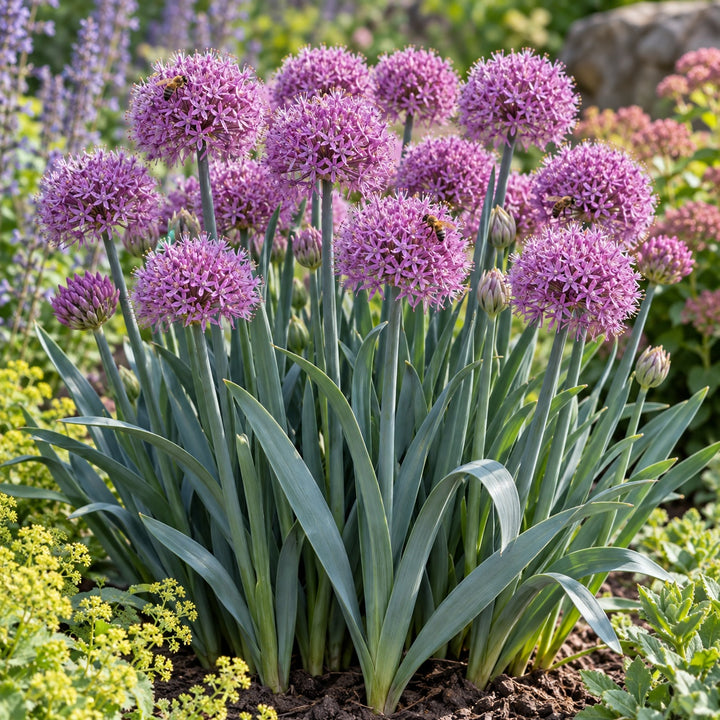
Serendipity ornamental onion takes the easy, summer-blooming allium gardeners already love and adds striking powder blue foliage. Thick, strappy, slightly glossy leaves form a compact upright clump, and from late July rosy purple globes about two inches across crowd the top of it.
It has been a repeat top performer in Michigan trial gardens, which tells you it handles our winters and summers without fuss.
Serendipity at a glance
| Trait | What to expect |
|---|---|
| Botanical name | Allium 'Serendipity' |
| Flowers | Rosy purple globes, about 2 inches across |
| Foliage | Powder blue to blue-green, thick and strappy |
| Size | 15 to 20 inches tall, 10 to 15 inches wide |
| Bloom | Starts late July, peaks early August |
| Hardiness | USDA zones 4 to 8 |
| Light | Full sun to part shade |
| Wildlife | Excellent for bees and butterflies; deer and rabbit resistant |
The second act after lavender
Lavender's first flush fills early summer. Serendipity takes over in late July and early August, when many lavender beds look a little quiet after their first trim. Its rosy purple globes and blue leaves sit in the same cool palette as lavender's purple flowers and silver foliage, so the bed keeps its look while the bloom changes hands.
At 15 to 20 inches, it fits the front of the border, between lavender plants or along a path. The round flower heads are a nice contrast to lavender's spikes, and the foliage stays tidy all summer in full sun instead of flopping or browning like some older alliums.
Lay out the combination in the Companion Plant Planner, and check the Lavender Bloom Calendar to time the handoff.
Care made simple
- Soil: lean to average and well drained. Soggy soil in wet summers can rot the rhizomes.
- Water: water it in during the first season; after that it is very heat and drought tolerant.
- Deadheading: remove spent heads if you want to limit seedlings, or leave them standing for texture.
- Cleanup: leave the foliage until it yellows, then cut back in late fall or early spring. No mulch needed.
- Dividing: lift and split clumps in spring every few years to keep them full.
Flowers for the vase
The globes are good for cutting and drying. Cut them when most of the tiny florets are open; dried, they hold their round shape and pair well with lavender in a bundle. The leaves smell of onion when crushed, while the flowers are only lightly scented, so strip foliage before bringing stems indoors.
Bare root format
Serendipity is offered as a bare root plant. Plant it with the crown just at the soil surface and water it in well. See the product page for current availability.
Frequently asked questions
Is it safe for pets?
Like other onions, it is toxic to dogs and cats. Plant it where pets will not chew it.
Can I cook with it?
No. It is an ornamental, grown for its flowers and foliage.
Will it spread?
It forms a slowly widening clump. Deadheading keeps self-sown seedlings in check.















Share how it went in your field