

Product Field NotesCompanion Plants
Seventh Heaven Shasta Daisy: Fluffy Cream Blooms for Lavender
 Save
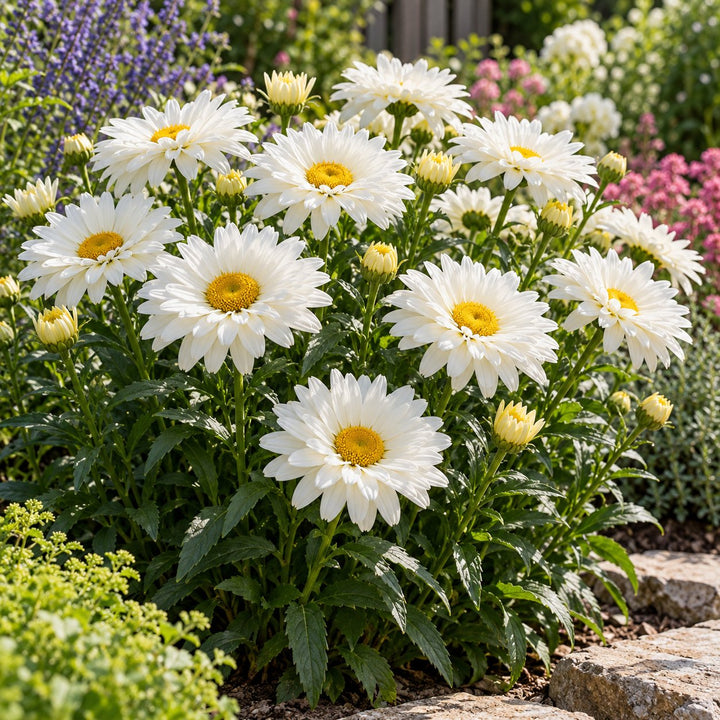
Seventh Heaven Shasta daisy starts with lemon yellow buds that open into big, 4-inch creamy white flowers with three rows of overlapping petals around a small gold center. The result is a full, fluffy, semi-double daisy with a two-tone look while buds and blooms share the plant.
Daisies and lavender are the cottage-garden pairing people picture first, and this one makes it look effortless.
Seventh Heaven at a glance
| Trait | What to expect |
|---|---|
| Botanical name | Leucanthemum × superbum 'Seventh Heaven' |
| Flowers | Creamy white, semi-double, about 4 inches across, from lemon yellow buds |
| Foliage | Dark green, lance-shaped and toothed |
| Size | 20 to 22 inches tall, 22 to 24 inches wide |
| Bloom | Starts mid-June, peaks early July, repeats when deadheaded |
| Hardiness | USDA zones 5 to 9 |
| Light | Full sun |
| Wildlife | Good for pollinators; moderately deer resistant |
Why it pairs so well with lavender
White makes purple look cleaner and brighter, and Seventh Heaven's cream-and-gold flowers land in mid-June, right as English lavender begins to color. The rounded mound is about the same height as many mid-size lavenders, so the two can sit side by side in a front or middle row. Alternate them in a long bed for a classic purple-and-white rhythm.
There is one difference to plan around. Shasta daisies like a bit more water in dry spells than lavender does and a slightly richer, average soil. Place them at the edge of the lavender planting where you can give them an occasional drink without soaking the lavender's crowns.
Care through the season
- Water: during dry spells, at the base of the plant. Avoid wetting the foliage in humid weather to limit leaf spot.
- Deadheading: side branches carry a second round of flowers once the first blooms are removed.
- Pests: watch for aphids and four-lined plant bug, which can spot and distort leaves.
- Fall: cut flowering stems but leave the low basal leaves in place.
- Winter: drainage is everything. Crown rot in wet, heavy soil causes most winter losses.
- Every 2 to 3 years: divide in spring to keep clumps vigorous.
Cutting and containers
The sturdy, branched stems make good cut flowers. Cut when blooms are freshly open and pair them with fresh lavender for a simple farmhouse jar. The flowers do not dry well, so enjoy them fresh. Its compact size also suits a large patio container with good drainage. Plan a cutting row with the Cut Flower Planner.
Format
Seventh Heaven is offered as a full 72-cell plug tray, a good fit for mass plantings, cutting gardens and growers potting up their own stock. See the product page for current availability.
Frequently asked questions
Are the flowers white or yellow?
Both, briefly. The buds are lemon yellow and open to creamy white, so the plant shows both colors during bloom.
Why did my Shasta daisy die over winter?
Usually wet soil around the crown. Improve drainage and leave the basal leaves in place over winter.
Is it a good cut flower?
Yes, for fresh bouquets. It is not a good choice for drying.














Share how it went in your field