

Product Field NotesCompanion Plants
Sombrero® Adobe Orange Coneflower: Pumpkin Color Opposite Purple
 Save
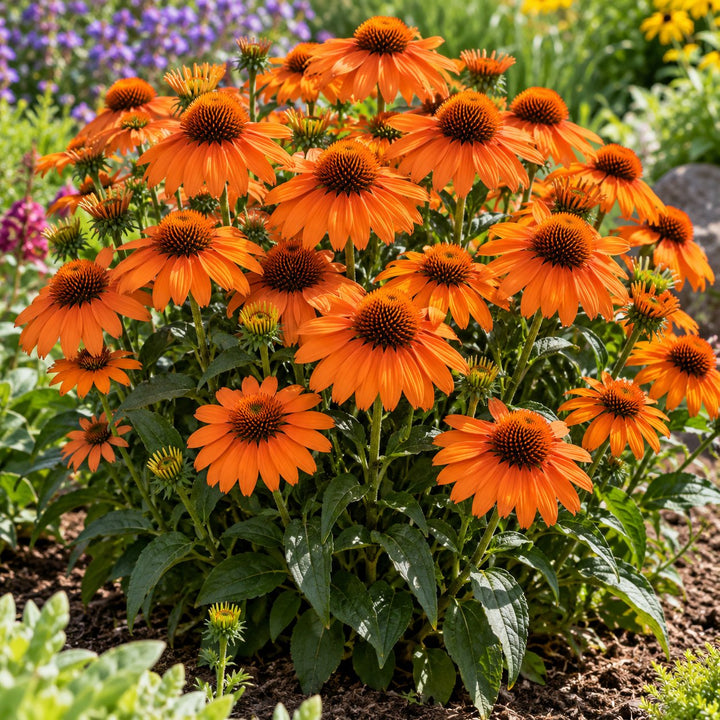
Sombrero® Adobe Orange coneflower is one of the most saturated orange coneflowers you can grow. Both the 2½ to 3 inch petals and the domed cones are orange, so the color reads strongly from across the yard. The plant is compact and bushy, and at peak it blooms so heavily that the foliage nearly disappears under a solid dome of pumpkin orange.
Orange is purple's opposite on the color wheel, which makes this one of the liveliest partners you can give lavender.
Adobe Orange at a glance
| Trait | What to expect |
|---|---|
| Botanical name | Echinacea Sombrero® Adobe Orange |
| Flowers | Intense pumpkin orange, 2½ to 3 inches, matching orange cone |
| Foliage | Dark green, lance-shaped |
| Size | 18 to 20 inches tall and wide |
| Bloom | Starts late June, peaks mid-July, through summer |
| Hardiness | USDA zones 4 to 9 |
| Light | Full sun to light part shade |
| Wildlife | Excellent for bees and butterflies; deer resistant |
Turning up the contrast
Some companions blend with lavender. Adobe Orange makes it pop. A clump of saturated orange beside a drift of deep purple lavender is the kind of combination that makes people stop on the sidewalk. Because the plant stays about 18 to 20 inches tall and wide, it can sit right alongside mid-size lavenders rather than behind them, so the two colors meet at eye level.
If you want to soften the effect, add silver foliage plants between them, or use a paler lavender. For a hot-color garden, lean into it with yellows and reds. Try different combinations in the Companion Plant Planner.
Planting and care
- Soil: average to lean and well drained, especially over winter. Hybrid coneflowers are most often lost to wet winter soil.
- Timing: plant by late summer so roots establish before winter.
- Water: once established it handles dry spells with little extra water. It also tolerates salt.
- Deadheading: snip faded flowers to keep new buds coming.
- Heat: color is richest in moderate temperatures and can fade faster in extreme heat.
- Winter: leave stems and the basal tuft of leaves standing, and avoid heavy mulch over the crown.
Watch for aster yellows, which causes distorted, greenish flowers; remove affected plants promptly.
Containers and cut flowers
Its compact, rounded shape suits a large sunny container, paired with a potted lavender for a portable dose of orange and purple. The flowers are good for cutting and drying, and the faint, lightly sweet, honey-like scent is a pleasant surprise up close.
Format
Adobe Orange is offered as a full 72-cell plug tray, good for mass plantings, pollinator gardens and growers. See the product page for current availability.
Frequently asked questions
Is the cone orange too?
Yes. The cone is a matching orange-brown, which is why the whole flower reads as orange from a distance.
Why do coneflowers sometimes die after one winter?
Wet, heavy soil is the usual cause. Good drainage and leaving the basal leaves in place over winter help most.
Do birds eat the seeds?
Leave the last round of seed heads standing in fall and winter birds will visit them.

































Share how it went in your field