

Product Field NotesCompanion Plants
South Seas Daylily: Coral-Tangerine Warmth in a Sunny Bed
 Save
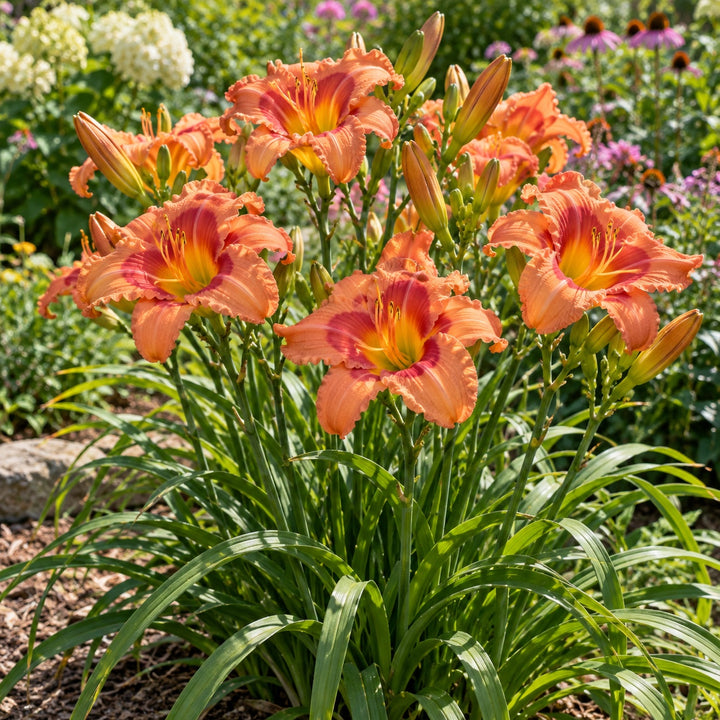
South Seas daylily has a color that is hard to pin down and easy to love: coral-tangerine petals with a reddish-coral band around the center and a yellow throat, edged with graceful ruffles. The flowers, about five inches across, are lightly fragrant and open in late afternoon, staying open into the next day.
It is a vigorous, long-established, award-winning grower, and its warm tones make a lively contrast with cool purple lavender.
South Seas at a glance
| Trait | What to expect |
|---|---|
| Botanical name | Hemerocallis 'South Seas' |
| Flowers | Coral-tangerine, reddish-coral band, yellow throat, 5 to 5½ inches |
| Foliage | Medium green, arching; dies back in winter |
| Size | Scapes to about 30 inches; foliage about 18 inches tall, 18 to 24 inches wide |
| Bloom | Starts early July, peaks mid-July, some rebloom |
| Hardiness | USDA zones 3 to 9 |
| Light | Full sun to light part shade |
| Wildlife | Deer find it tasty |
Warm color beside cool lavender
Coral and tangerine are warm cousins of orange, so South Seas sets off purple lavender with a contrast that is bright but not harsh. Its main flush starts in early July as English lavender peaks, and its tall, multi-branched scapes, with a high bud count of around 30 to 35 buds each, keep flowers opening for weeks.
The late-afternoon opening habit is a nice bonus for anyone who gardens after work. The flowers are freshest just as you get home, and they stay open into the next day. Plant South Seas at the back or outer edge of a lavender bed, where its 30-inch scapes rise above lavender mounds. The Companion Plant Planner can help with placement.
Planting and care
- Sun: at least six hours. It is very heat tolerant and blooms best in full sun.
- Soil: average and well drained. Once established it handles heat, clay and dry spells, so it can take the heavier edge of a bed while lavender keeps the sharpest drainage.
- Deadheading: remove spent scapes promptly after the main flush to encourage later flowers.
- Wet summers: blooms can spot after rain; leaf streak and leaf spot are more common in humid seasons.
- Fall: a dormant type that dies back completely and is fully hardy in Michigan. Clean up foliage after a hard frost.
- Every few years: divide crowded clumps to keep the bloom strong.
Bare root format
South Seas is offered as a bare root plant. Soak the roots briefly, spread them over a small mound in the planting hole, set the crown about an inch below the surface and water well. See the product page for current availability.
Frequently asked questions
Why are the flowers open in the evening?
South Seas opens in late afternoon and stays open into the next day, so you get evening and morning color from each bloom.
Does it rebloom?
It has some rebloom. Removing finished scapes helps encourage a later round.
Is it safe around cats?
All parts of daylilies are toxic to cats, so keep it away from where cats roam.

































Share how it went in your field