

Use & Care NotesLavender Plants
Spike Lavender: The Sharp, Herbal Parent of Lavandin
 Save
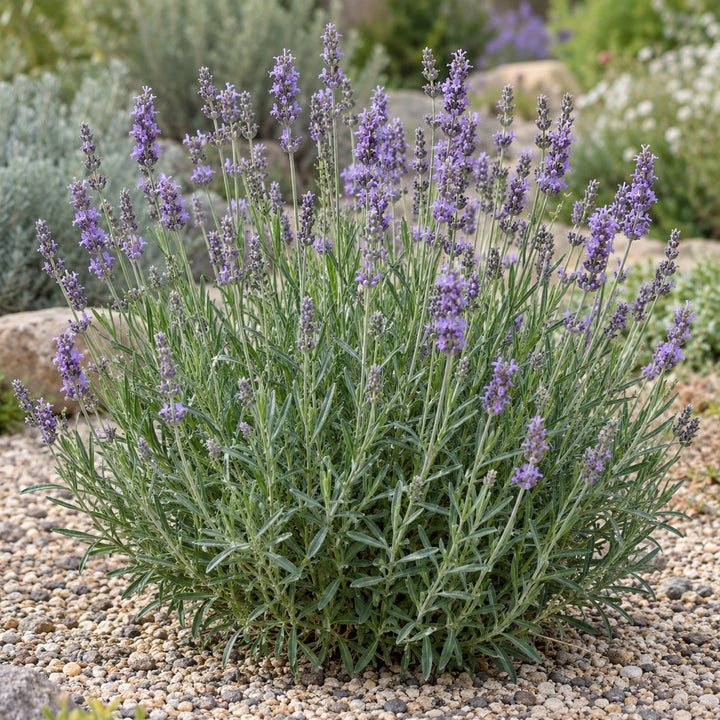
Spike lavender is Lavandula latifolia, a species lavender with broader green leaves than English lavender and light purple flowers in midsummer. It grows as a sub-shrub about 24 inches tall and wide, and its fragrance is sharp and herbal: eucalyptus-like, camphor-forward and lightly floral.
If you grow any lavandin, you already know half of this plant. Lavandins are hybrids of English lavender and spike lavender.
Spike lavender at a glance
| Trait | What to expect |
|---|---|
| Botanical name | Lavandula latifolia |
| Flower color | Light purple |
| Foliage | Green, broader than English lavender |
| Habit | Sub-shrub |
| Mature size | About 24 inches tall and 24 inches wide |
| Bloom | Single flush in mid-July |
| Hardiness | USDA zones 7a to 9b |
| Fragrance | Moderate; sharp, herbal, eucalyptus-like and camphor-forward |
| Oil | Rated great for essential oil suitability |
Meet the parent of lavandin
Lavandins such as the Riverina and Seal cultivars are crosses of English lavender and spike lavender. English lavender brings sweetness and cold hardiness; spike lavender brings vigor, long stems and that fresh, camphor-rich edge. Growing the species itself is a fun way to understand where lavandin's character comes from, and a pot of each side by side makes a good conversation piece for any lavender enthusiast. The Botanical Groups page explains the family tree.
Planting and care
- Sun: full sun, the more the better.
- Soil: lean and very well-drained. Gravelly or sandy soil and raised beds suit it.
- Spacing: about two feet apart.
- Water: regularly during establishment, then sparingly. Low water needs.
- Feeding: not needed.
- Pruning: after the July flush, remove spent stems and lightly shape the plant, staying above bare wood. There is no listed rebloom.
Cold climates
Spike lavender is rated for zones 7a to 9b. In zone 6 and colder, it is safest grown in a container that you move to a bright, cool, frost-free spot for winter, watering lightly until spring. If you try it in the ground near the edge of its range, give it the warmest, driest spot you have. Check your zone with the USDA Zone Finder.
Comparing it with English lavender
Side by side, the differences are easy to see. Spike lavender has wider, greener leaves, flowers later than most English lavenders and carries a sharper, more camphor-rich scent. English lavender is sweeter, more compact in leaf and much hardier. Spike lavender is also less cold-tolerant, which is one reason lavandins, with their English lavender parent, are so useful for growers in colder regions. Use the Compare tool to line them up.
Uses
Spike lavender is rated great for essential oil suitability, and its sharp scent is distinct from sweet English lavender. It is rated good for fresh and dried flowers, so its light purple spikes work in small bundles and arrangements, and it is rated great for pollinators. Culinary use is not recommended.
Frequently asked questions
Is spike lavender the same as lavandin?
No. Spike lavender is a species. Lavandin is a hybrid of spike lavender and English lavender.
Why is it called spike lavender?
It is a long-standing common name for Lavandula latifolia. Its broad leaves are part of what sets it apart from English lavender.
Can I cook with it?
Culinary use is not recommended. Its strong camphor character suits fragrance better than food.
















Share how it went in your field