

Use & Care NotesLavender Plants
ST 18-29 Lavender: Ruffled Lilac-to-Plum Bracts in a Small Pot
 Save
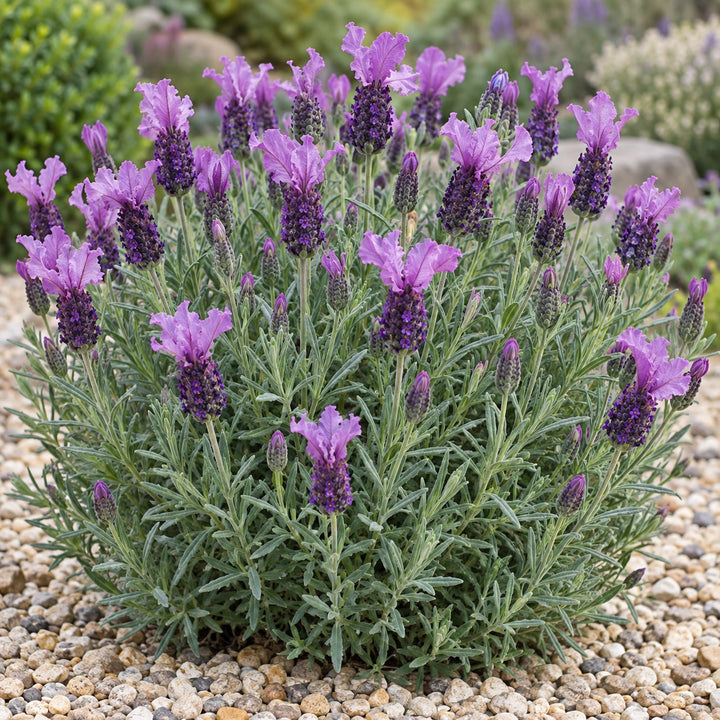
ST 18-29 lavender is a small Spanish lavender with an eye-catching detail: large, ruffled bracts in shades from lilac to plum purple. It forms a rounded, dense yet airy plant about 11.8 inches tall and 9.8 inches wide, with gray-green foliage, and it is documented as free-flowering with high rebloom.
The name reads like a part number. The flowers do not.
ST 18-29 at a glance
| Trait | What to expect |
|---|---|
| Botanical name | Lavandula stoechas 'ST 18-29' |
| Flower color | Lilac to plum purple |
| Bracts | Large and ruffled |
| Foliage | Gray-green |
| Habit | Rounded, airy and dense, free-flowering |
| Mature size | About 11.8 inches tall and 9.8 inches wide |
| Bloom | Starts early May, peaks late May, high rebloom |
| Hardiness | USDA zones 8a to 8b |
| Fragrance | Moderate; resinous and herbal |
Built for close-up viewing
Ruffled bracts are a detail best seen from a few feet away, so put ST 18-29 where people sit: a café table, a porch step, a balcony rail or a windowsill planter that opens onto a sunny deck. The shifting lilac and plum tones look lovely with gray stone, weathered wood and white-painted pots, and they pair well with other soft pastels in a mixed container.
Container care
- Pot: 6 to 8 inches across, with a drainage hole.
- Mix: fast-draining potting mix with grit or perlite.
- Light: full sun outdoors from late spring to fall.
- Water: when the top of the mix is dry; small pots need frequent checks in summer heat.
- Deadhead: snip faded heads to a leaf pair. Its high rebloom rating means new ruffles follow.
- Trim: after the late-May peak, shape it lightly to keep it rounded.
Winter
With a zone listing of 8a to 8b, ST 18-29 needs protection from northern winters. Bring it indoors before the first frost to a bright, cool spot such as a sunny window in a cool room. Water sparingly. In spring, move it back outside gradually once frost danger passes. The Frost Date Estimator helps you time the move, and the Plant Health Checker can help if leaves start to yellow indoors.
Grouping small Spanish lavenders
A single small pot can look lonely. Group ST 18-29 with two or three other compact lavenders of different heights and colors, such as a white Spanish lavender and a dark purple one, in matching pots on a step or tray. Clustered pots also shade each other's sides a little in hot weather, which helps the mix dry more evenly. Keep the group in full sun and check each pot separately before watering, since small containers dry at different rates.
Uses
ST 18-29 is rated good for fresh and dried flowers and great for pollinators. Its stems are short, so use the heads in tiny posies, pressed flower crafts or potpourri. Culinary use is not recommended.
Frequently asked questions
What does ST 18-29 mean?
It is a selection code rather than a descriptive name. The plant is a Spanish lavender, Lavandula stoechas.
Why do the bracts change color?
Its bracts are documented as lilac to plum. Age, light and temperature all shift the shade.
Can it live outside year round?
Only in zones 8a to 8b with excellent drainage. In colder areas, overwinter it indoors.
















Share how it went in your field