

Use & Care NotesLavender Plants
St. Jean Lavender: A Pink-Tinged English Lavender with a Sweet Scent
 Save
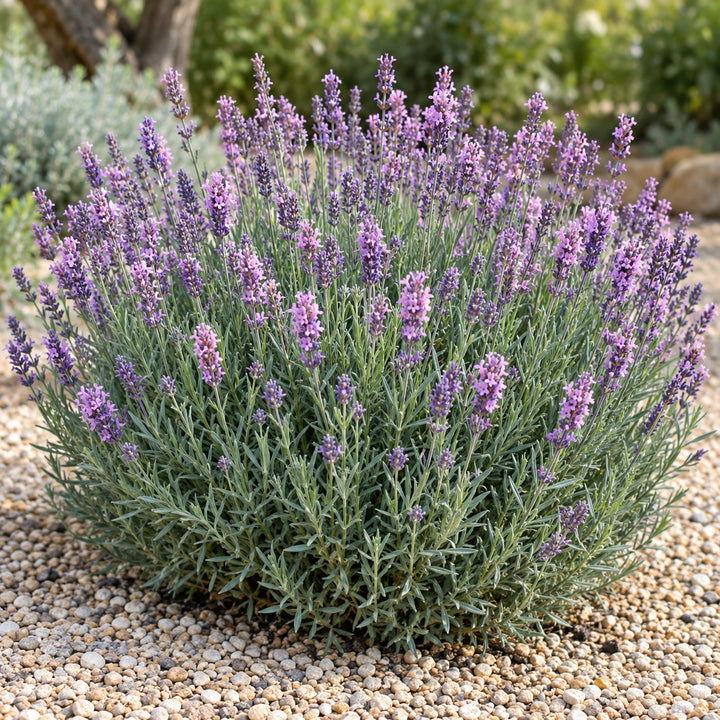
St. Jean lavender sits right on the line between pink and purple. Its flowers open a soft pink-violet over a bushy, compact mound of gray-green leaves, and the scent is the sweet, floral kind that English lavender is loved for, with very little of the sharp, camphor edge you get from lavandins.
It is Lavandula angustifolia 'St. Jean', an English lavender, which puts it among the hardier lavenders for gardens that see a true winter. If you want something a little different from the classic deep purple without giving up cold tolerance, this is a good place to look.
St. Jean lavender at a glance
| Trait | What to expect |
|---|---|
| Botanical name | Lavandula angustifolia 'St. Jean' |
| Flower color | Pink-violet to purple |
| Foliage | Gray-green, evergreen |
| Size | About 24 inches tall and 30 inches wide |
| Bloom | Starts early June, peaks mid-June, moderate rebloom |
| Hardiness | USDA zones 5a to 8b |
| Fragrance | Strong, sweet and floral with low camphor |
| Best uses | Essential oil, fragrance, sachets, pollinator plantings |
What makes St. Jean worth a spot
Color is the first reason. A row of St. Jean reads warmer than most English lavenders, so it softens a planting of deep purples like Hidcote types and bridges the gap to true pink or white cultivars. Planted on its own, it gives a cottage-garden look that is a little less expected.
The second reason is fragrance. Its essential oil suitability is rated excellent, and the scent profile is sweet and herbaceous rather than medicinal. That makes it a nice choice for anyone who likes to dry buds for sachets, drawer bags or a jar on the windowsill. Bees and butterflies like it too; its pollinator rating is great, and deer tend to pass it by.
Planting St. Jean well
Choose the sunniest spot you have, ideally six to eight hours of direct sun or more. Soil matters even more than sun: lavender roots want air, so sandy, gravelly or loamy ground that drains within minutes after a heavy rain is ideal. If you garden on clay, build a raised bed or a wide mound and mix in coarse grit before planting.
At roughly 24 by 30 inches, St. Jean needs about two and a half feet from center to center if you want the mounds to just touch. Set the top of the root ball level with the surrounding soil, firm it in, and water slowly and deeply. Keep bark mulch and compost away from the crown; a thin layer of pea gravel is a better choice around the base.
For timing in your area, check the USDA Zone Finder and the Frost Date Estimator.
A year with St. Jean
- Spring: wait until new gray-green growth shows, then tidy any winter-damaged tips. English lavender needs a cold winter to bloom well, so a real winter is a help here, not a problem.
- Early summer: the main flush opens in early June and peaks by mid-June. This is the time to cut for drying.
- After bloom: shear off spent stems and about a third of the soft growth, staying above the woody base. Expect a moderate second flush.
- Fall and winter: stop pruning by late summer so the plant can harden off. Good drainage matters more than any winter cover.
The Pruning Calendar lays out the timing month by month.
Harvesting for fragrance
For sachets and dried buds, cut stems on a dry morning when most buds are colored and only a few flowers have opened. Bundle them small, hang them upside down somewhere dark and airy, and rub the buds off once the stems snap cleanly. English lavender is also widely used in the kitchen, and St. Jean's culinary rating is great; use buds from plants grown as a food crop and start with a small pinch.
Choosing a plant size
St. Jean is offered as 3-inch plugs, 4-inch pots and 1-gallon pots. Plugs are the budget-friendly way to plant a row; gallon pots give you a fuller plant the first summer. See the product page for current sizes and availability, and use Notify Me there if the size you want is not ready.
Frequently asked questions
Is St. Jean pink or purple?
Both, in a way. The flowers are a pink-violet that reads lighter and warmer than classic purple English lavender, especially next to darker cultivars.
Will it come back after a Michigan winter?
St. Jean is rated for USDA zones 5a to 8b. English lavenders are among the hardiest types, and well-drained soil is what carries them through cold, wet winters.
How does it compare with other pink-leaning English lavenders?
Use the Compare tool to line up size, bloom timing and color side by side before you choose.
















Share how it went in your field