

Use & Care NotesLavender Plants
Sumian Lavender: A Wide, Blue Lavandin for Oil and Bundles
 Save
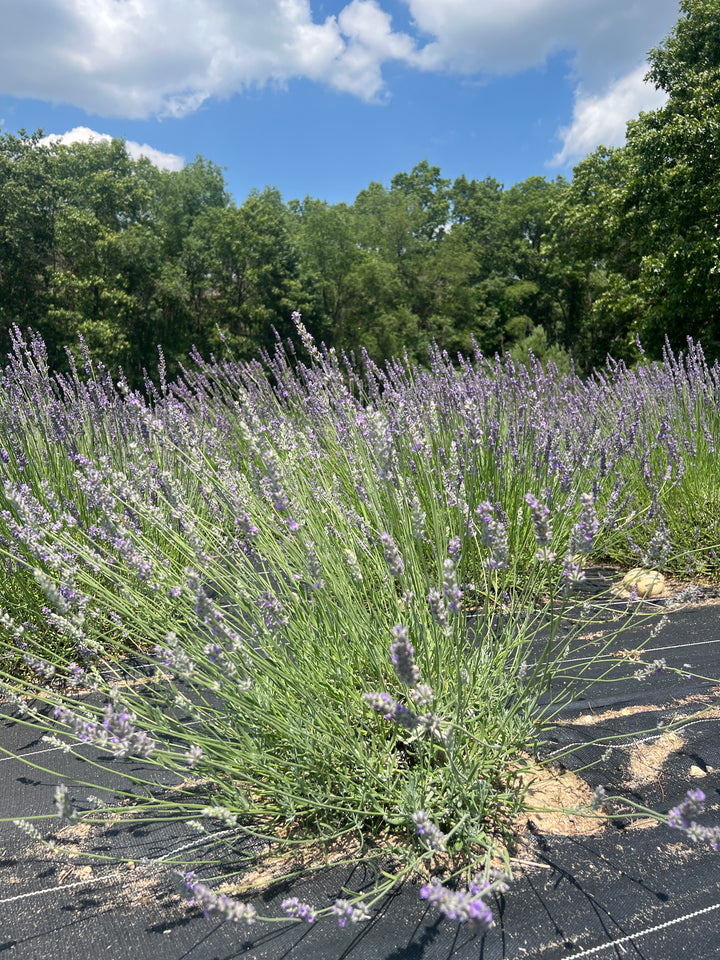
Sumian lavender is a lavandin built for production. It forms a bushy, very wide plant with aromatic silvery blue-gray leaves and fragrant dark violet-blue flowers, and it earns excellent marks for essential oil, cut stems, dried flowers and commercial fields.
Lavandins, Lavandula × intermedia, are hybrids of English lavender and spike lavender. They tend to be larger and later than English lavender, with longer stems and a stronger, more camphor-bright scent. Sumian is a good example of the type, with an unusually generous spread.
Sumian lavender at a glance
| Trait | What to expect |
|---|---|
| Botanical name | Lavandula × intermedia 'Sumian' |
| Flower color | Blue to dark violet-blue |
| Foliage | Blue-gray to silvery gray, aromatic |
| Size | Roughly 20 to 32 inches tall and up to about 59 inches wide; check the listing for the current size |
| Bloom | A single main flush in midsummer, peaking in July |
| Hardiness | USDA zones 5a to 9b |
| Fragrance | Moderate, lavandin-style |
| Best uses | Essential oil, fresh bouquets, dried flowers, U-pick, commercial fields |
Why growers plant Sumian
Lavandins are the workhorses of lavender fields. Their extra size and vigor usually mean more stems per plant and more oil per plant than English lavender, and Sumian's ratings reflect that: excellent for oil, excellent for fresh and dried flowers, excellent for commercial fields and rated for large bundles in U-pick settings. Its parentage is listed as L. angustifolia × L. latifolia, the classic lavandin cross.
For home gardeners, the same traits translate into a big, silvery shrub that anchors a sunny bed and gives you armloads to cut. Pollinators rate it excellent, and deer tend to leave it alone.
Spacing a wide plant
The spread is the number to plan around. Sources for Sumian differ on height, but they agree it gets wide, up to about 59 inches. In a garden bed, give each plant four to five feet from center to center so the mounds have room to breathe. Crowded lavandins hold moisture in their centers, and that invites trouble in humid summers.
In rows, leave a path wide enough to walk and harvest comfortably between them. Plant in full sun, in sandy, loamy or gravelly soil that drains fast, or on raised rows if your ground is heavy. The Plant Finder can help if you are still deciding between lavandins.
Seasonal care
- Establishment: water deeply whenever the top few inches of soil dry out during the first growing season.
- Mature plants: water needs are low. Most years, rain is enough once the roots are down.
- Feeding: skip heavy fertilizer. Lean soil means sturdier stems.
- Pruning: after harvest, shear the whole mound into a rounded shape, leaving a few inches of green growth above the woody base. Rebloom is low, so one good cut a year is the routine.
- Winter: a lavandin needs winter chill to bloom well. Drainage, not covering, is what brings it through.
Harvest for oil, bouquets and bundles
For oil, growers usually cut when a good share of the flowers on each spike are open, since that is when the scent is fullest. For dried bundles, cut a little earlier, when the buds are colored and just a few flowers have opened; the color and shape hold better. Fresh bouquets can be cut anytime the spikes look good. Lavandin is stronger and more camphor-forward in flavor than English lavender, so for cooking most bakers prefer an English type; if you try Sumian in the kitchen, use only food-grown buds and very little.
The Harvest Calendar helps you plan your cutting window.
Choosing a plant size
Sumian is offered as 3-inch plugs, 4-inch pots and 1-gallon pots. Plugs make sense for rows; gallon pots fill a garden spot faster. See the product page for current sizes and availability, and use Notify Me there if the size you want is not ready.
Frequently asked questions
Is Sumian a good lavender for essential oil?
Yes. It is rated excellent for oil and for high oil production, which is typical of a good lavandin.
Why do the listed heights differ?
Lavandin size changes a lot with climate, soil and age, and published measurements vary. Plan for a wide plant and check the listing for the current size.
Will it survive a Michigan winter?
Sumian is rated for USDA zones 5a to 9b. Well-drained soil is the key to winter survival.
















Share how it went in your field