

Use & Care NotesLavender Plants
Summer Serenade Lavender: Early Blue Blooms That Keep Coming
 Save
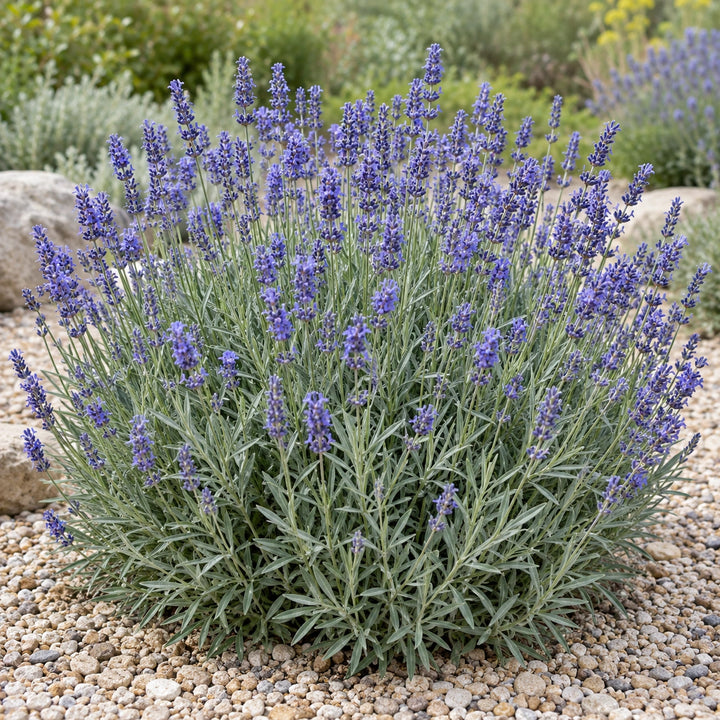
Summer Serenade lavender is an English lavender that does not like to stop singing. It starts blooming early, in June, and keeps sending up blue spikes as summer goes on, all over a tidy mound of silver foliage that looks good even when it is between flushes.
It is a Lavandula angustifolia that is documented as winter-hardy and early, with true-lavender flowers and continuous flowering through the season. Unlike many English lavenders, it does not need a cold spell to start blooming.
Summer Serenade at a glance
| Trait | What to expect |
|---|---|
| Botanical name | Lavandula angustifolia 'Summer Serenade' |
| Flower color | Blue to dark lavender |
| Foliage | Silver |
| Size | About 16 inches tall and 24 inches wide |
| Bloom | Starts early June, peaks mid-July, high rebloom |
| Hardiness | USDA zones 5a to 9b |
| Fragrance | Strong, sweet and floral with low camphor |
| Best uses | Dried flowers, essential oil, fragrance, commercial fields |
A long season in a small plant
Most English lavenders give you one big show and a modest encore. Summer Serenade is rated high for rebloom, so the show is spread out. That is useful in a garden where you want color for weeks, and in a cutting patch where you would rather harvest a little at a time than all in one weekend.
At about 16 by 24 inches, it is compact enough for the front of a border, a herb garden edge or a big container. The silver leaves make it stand out against green neighbors, and the blue flowers read cool and crisp.
Planting
Give it full sun and soil that drains quickly. Sandy loam is ideal; clay needs to be raised or amended with coarse grit. Space plants about two feet apart for a continuous low hedge, or a little wider if you want each mound to stand on its own. Plant the crown level with the soil and water deeply.
Because it blooms early, it can flower the first summer from a larger pot. Plugs will catch up within a season or two.
Care through the year
- Spring: clean up winter-browned tips once new growth starts. Do not cut into old, leafless wood.
- Summer: snip spent spikes as each flush fades. That small effort pays off with more flowers.
- Late summer: give the whole plant a light shaping trim and then let it rest so it can harden off before winter.
- Water: regular deep watering in the first season, then low water needs once established.
- Winter: fast drainage is the best winter protection. Avoid piling wet mulch against the crown.
Month-by-month reminders are on the Care Calendar.
Drying and other uses
Summer Serenade is rated excellent for dried flowers, which is its best trick. Cut stems on a dry morning when the buds are fully colored and only a few are open, bundle them in small bunches with a rubber band, and hang them upside down in a dark, airy place. The blue holds well. It is also rated excellent for essential oil and great for commercial fields.
Its culinary rating is high, though the listing's notes advise checking cultivar-specific guidance before cooking with it. If you do, use only buds from plants grown as a food crop and start with a very small amount.
Choosing a plant size
Summer Serenade is offered as 3-inch plugs, 4-inch pots and 1-gallon pots. See the product page for current sizes and availability, and use Notify Me there if the size you want is not ready.
Frequently asked questions
Does Summer Serenade bloom the first year?
It is an early English lavender that does not need a cold spell to flower, so larger plants often bloom in their first summer. Plugs may need a season to size up.
Is it good for drying?
Yes. It carries an excellent dried-flower rating, and its blue color holds well when dried in the dark.
How do I keep it blooming all summer?
Deadhead spent spikes after each flush and keep the plant in full sun. A light trim in late summer keeps it tidy without hurting next year's bloom.
















Share how it went in your field