

Product Field NotesLavender Plants
Vicenza Blue Lavender: A Foot-High Edger for Kitchen Gardens
 Save
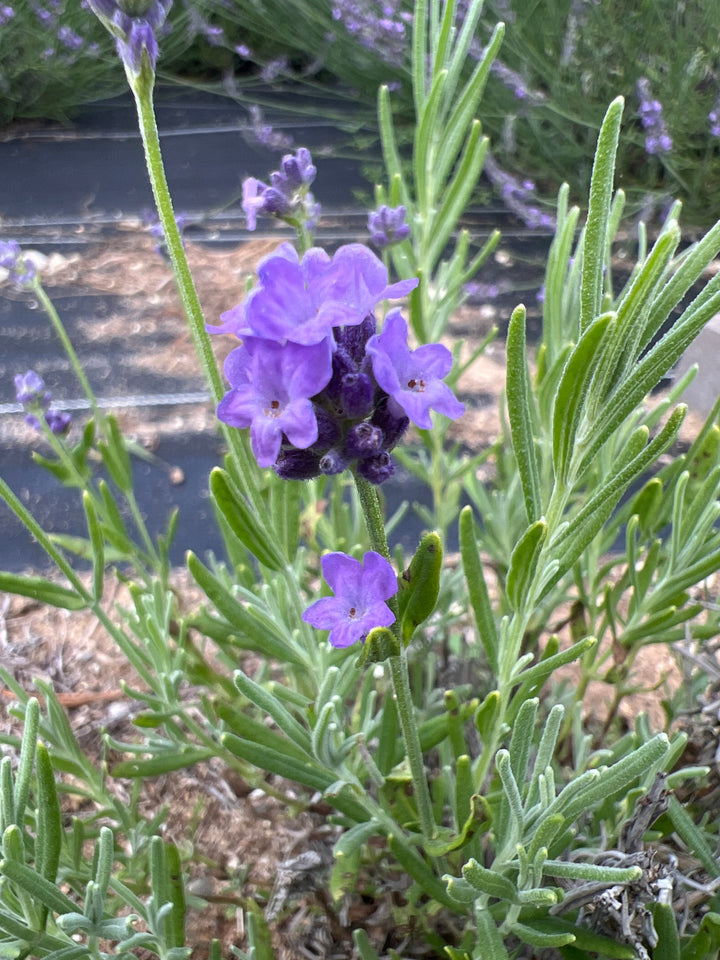
Vicenza Blue lavender is a small English lavender with a big job description: edge the path, frame the herb bed and still give you enough buds for a batch of lavender shortbread. It forms a compact mound about 12 inches tall and wide, with gray-green foliage and purple-blue flowers that carry the sweet, soft scent of English lavender.
As a Lavandula angustifolia, it is among the hardier lavenders and is rated for USDA zones 5a to 9a. It blooms from early June, peaks in mid-July and has a moderate rebloom.
Vicenza Blue at a glance
| Trait | What to expect |
|---|---|
| Botanical name | Lavandula angustifolia 'Vicenza Blue' |
| Flower color | Purple-blue |
| Foliage | Gray-green |
| Size | About 12 inches tall and 12 inches wide |
| Bloom | Starts early June, peaks mid-July, moderate rebloom |
| Hardiness | USDA zones 5a to 9a |
| Fragrance | Strong, sweet and floral with low camphor |
| Best uses | Edging, herb gardens, culinary buds, fragrance |
An edger for the kitchen garden
Kitchen gardens are usually planted near the house for convenience, and Vicenza Blue suits that setting well. Line the sunny side of a raised vegetable bed, the edge of a gravel path to the back door or the border of a potager. It stays low enough not to shade lettuce or herbs behind it, and its evergreen mound keeps the edge defined through winter.
The strong, sweet, low-camphor scent and great culinary rating make it a practical cooking lavender to have within reach. Grow the plants as a food crop: skip garden chemicals not meant for edibles.
Planting an edge
- Sun: full sun along the whole run, at least six to eight hours.
- Soil: fast-draining. In a raised bed with rich vegetable soil, mix extra grit into the lavender strip so it stays leaner and drier than the rest of the bed.
- Spacing: about 12 inches apart for a continuous edge.
- Watering: keep it on its own schedule if you can. Vegetables want frequent water; established lavender does not. Drip lines that skip the lavender strip work well.
Care through the year
Spring: once new growth starts, snip off winter-browned tips.
Summer: harvest buds as they color. After the main bloom, trim spent stems and lightly shape each mound with scissors or small shears for a moderate second flush.
Late summer and fall: make your last trim by late summer so new growth hardens off before frost.
Winter: English lavender needs winter chill to bloom. Keep the crown dry and free of heavy mulch.
The Care Calendar lists these steps month by month.
Harvesting for cooking
For culinary use, cut on a dry morning when the buds are fully colored and only a few flowers are open. Dry small bundles upside down in a dark, airy spot, then rub the buds off and store them in a sealed jar away from light. Lavender is strong, so start with a small pinch in recipes; lavender sugar, shortbread and lemonade are easy places to begin.
Choosing a plant size
It is offered as 3-inch plugs, 4-inch pots and 1-gallon pots. For a long edge, plugs are economical; for a short run by the door, larger pots look finished sooner. See the product page for current sizes and availability.
Frequently asked questions
Can Vicenza Blue grow in a vegetable bed?
Yes, along a sunny edge. Keep its strip leaner and drier than the vegetables, since lavender dislikes rich, wet soil.
How is it different from other compact English lavenders?
Compact cultivars differ in color, bloom timing and exact size. The Compare tool lines them up side by side.
Is it hardy?
It is rated for USDA zones 5a to 9a and handles cold well in soil that drains.

































Share how it went in your field