

Use & Care NotesLavender Plants
Victorian Amethyst Lavender: Uniform Upright Purple for Formal Rows
 Save
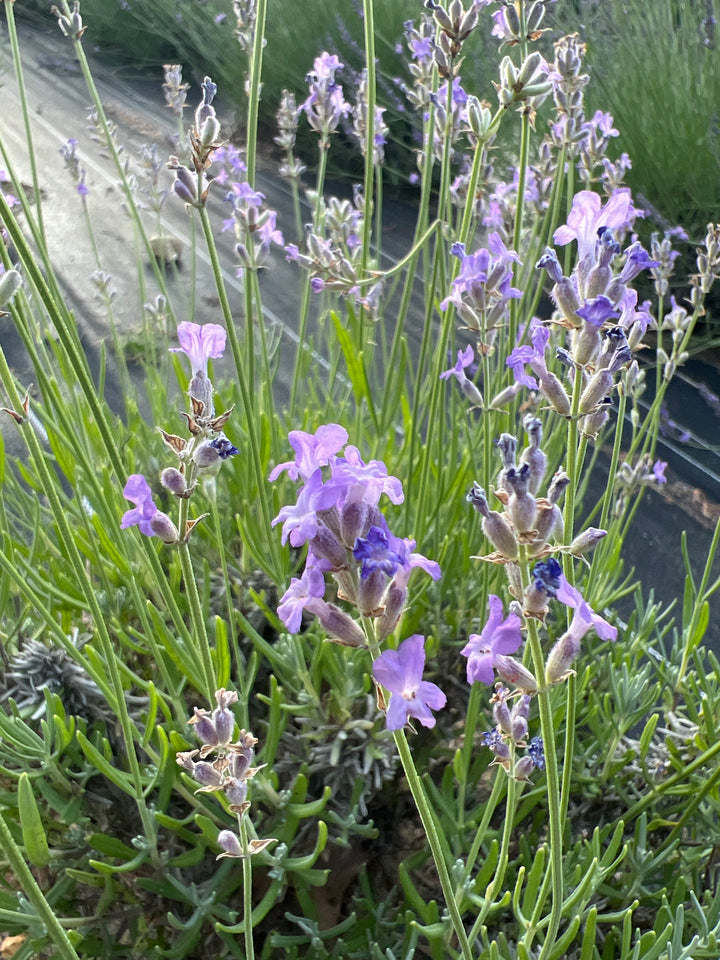
Victorian Amethyst lavender is the English lavender for gardeners who like things lined up. It is documented as a tall, fast-growing English lavender with a uniform, upright landscape habit, violet flowers set in purple calyces and silvery blue-gray foliage. The scent is the strong, classic English lavender fragrance.
It is Lavandula angustifolia 'Victorian Amethyst', rated for USDA zones 5a to 9b. That wide range and its tidy shape make it a natural for formal plantings, symmetrical beds and long rows that need to look even.
Victorian Amethyst at a glance
| Trait | What to expect |
|---|---|
| Botanical name | Lavandula angustifolia 'Victorian Amethyst' |
| Flower color | Violet-purple with purple calyces |
| Foliage | Blue-gray to silvery green |
| Size | About 24 inches tall and 30 inches wide |
| Bloom | Starts early June, peaks mid-July, moderate rebloom |
| Hardiness | USDA zones 5a to 9b |
| Fragrance | Strong, classic English lavender |
| Best uses | Formal plantings, rows, fragrance, essential oil |
Why uniformity matters
In a formal design, one floppy or oversized plant throws off the whole picture. A cultivar with a consistent, upright habit lets you plant a parterre, a pair of matching beds or a walkway lined on both sides and have it look intentional year after year. The purple calyces also add color before and after the flowers open, so the spikes look purple for longer than you might expect.
Fast growth is a bonus for new plantings, since the rows fill in sooner.
Design ideas
- Double-sided walk: a row on each side of a straight path, spaced evenly.
- Knot or parterre beds: as the purple filler inside low green edging.
- Symmetrical entry: matching groups of three on either side of a gate or steps.
- Field rows: its even habit suits straight rows, with a commercial field rating of good.
Sketch your layout in the Garden planner before ordering.
Planting and care
Full sun and quick drainage are essential. Space plants about 30 inches apart, measured center to center, for rows that touch at maturity. On heavy soil, raise the beds or plant on low berms. Water deeply after planting and through the first season whenever the top few inches dry; after that, water needs are low.
To keep a formal planting uniform, prune everything at the same time and to the same height. After the main bloom, shear off spent stems and about a third of the soft growth, staying above the woody base. Make the last trim by late summer. In spring, tidy winter-browned tips once new growth shows. English lavender needs winter chill to bloom, and dry roots are what get it through the cold.
The Pruning Calendar has the timing.
Harvest and uses
Cut stems for drying when the buds are colored and only a few flowers have opened; the purple calyces help the dried spikes keep their color. Its strong, classic fragrance and excellent essential oil suitability rating make it a good sachet and fragrance lavender. Its culinary rating is great as well; for cooking, use food-grown buds and start with a small pinch. Pollinators rate it great, and deer tend to avoid it.
Choosing a plant size
It is offered as 3-inch plugs, 4-inch pots and 1-gallon pots. For a formal planting, buying one size for the whole bed helps the plants mature evenly. See the product page for current sizes and availability.
Frequently asked questions
Is Victorian Amethyst good for a formal hedge?
Yes. It is documented as having a uniform, upright landscape habit, which suits formal rows and symmetrical designs.
How tall does it get?
About 24 inches tall and 30 inches wide, with flower spikes above the foliage.
Is it hardy in cold winters?
It is rated for USDA zones 5a to 9b. Good drainage is the key to winter survival.
















Share how it went in your field