

Product Field NotesCompanion Plants
Visions Astilbe: Raspberry Pink Pyramids for a Shady Border
 Save
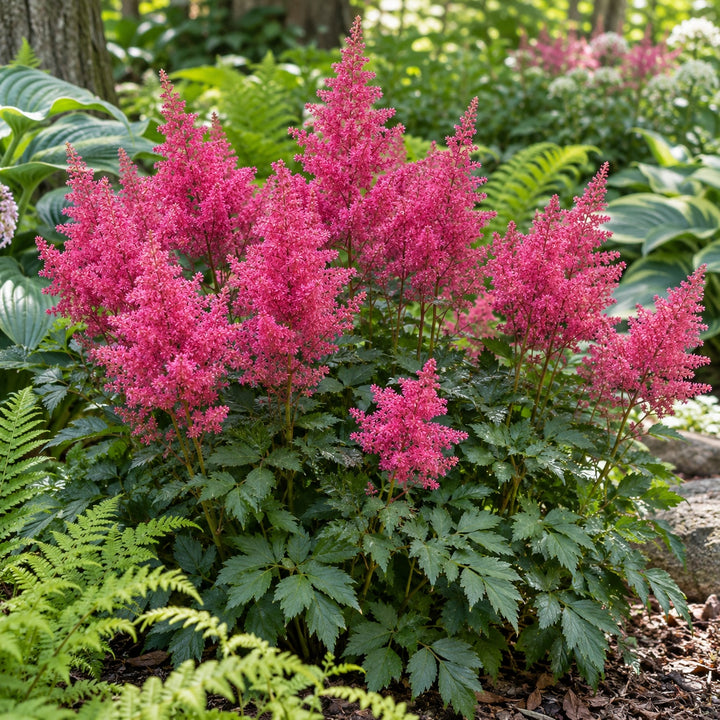
Visions astilbe is a dwarf Chinese astilbe with dense, pyramid-shaped plumes of raspberry pink flowers held upright on sturdy stems. Its large, clear green, coarsely textured leaves form a robust clump about 14 to 16 inches tall, so it fits containers and the front of a shaded border with ease.
It is a shade plant through and through. Think of it as the pink note on the cool side of the yard while lavender plays purple in the sun.
Visions at a glance
| Trait | What to expect |
|---|---|
| Botanical name | Astilbe chinensis 'Visions' |
| Flowers | Raspberry pink, dense pyramid-shaped plumes |
| Foliage | Large, clear green, coarsely textured |
| Size | 14 to 16 inches tall, 12 to 15 inches wide |
| Bloom | Early to mid-July |
| Hardiness | USDA zones 4 to 9 |
| Light | Part shade |
| Deer | Deer and rabbits leave it alone |
Later color for the shade garden
Many astilbes bloom in June and are done by the time summer heats up. Visions blooms in early to mid-July, extending astilbe color into the later season. That timing lines up with lavender's peak out in the sun, which is handy if you want both parts of the property to look their best at the same moment.
The pairing works through contrast across the garden: lavender's slim, silvery spikes in a hot, dry bed; Visions' plush pink pyramids in a cool, moist one. Raspberry pink and lavender purple are close relatives on the color wheel, so the two zones feel connected. Lay out both areas in the Companion Plant Planner.
A bit tougher than most astilbes
Chinese astilbes like Visions handle a little more sun and short dry spells than other astilbes, which makes them more forgiving at the edge of a shade bed or under trees that steal water. Still, they perform far better with steady moisture. Leaf scorch from drought is the most common problem, and afternoon shade helps a lot.
Planting and care
- Planting: set the bare root crown with its buds at the soil surface in rich, compost-amended soil, and water well.
- Mulch: a good layer holds moisture through summer.
- Water: water during dry weather, deeply rather than often.
- After bloom: leave the plumes; they dry in place and add texture into fall and winter.
- Spring: cut back the old plumes.
- Every few years: crowns slowly rise above the soil, so top-dress with compost or divide.
Crowded plantings in muggy weather can develop powdery mildew or leaf spot, so give each clump room. Japanese beetles are an occasional visitor.
Massing and containers
Planted in groups, Visions makes a dense groundcover of green leaves and pink plumes under trees. A single plant in a shaded container is just as good. The plumes also cut and dry well.
Frequently asked questions
How is Visions different from Vision in Red?
Both are compact Chinese astilbes. Visions has raspberry pink plumes over clear green leaves; Vision in Red has pinkish red plumes and bronze-green leaves.
Can I dry the plumes?
Yes. They are rated good for drying. Cut them at full color and hang them upside down in a dry, shaded spot.

































Share how it went in your field