

 Open in the Field Guide
We all need a Savior
“For all have sinned and fall short of the glory of God.”
Romans 3:23 (BSB)
None of us can earn our way to God by being good enough. We all need mercy.
 Field Guide · Plants and flowers
Juniperus ashei

Its airborne pollen can trigger seasonal allergies, especially in central Texas.
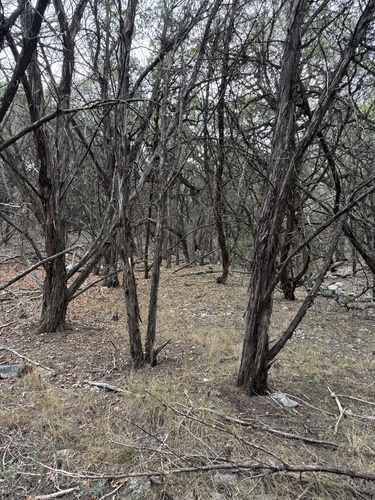
Ashe juniper is a drought-tolerant evergreen tree native to northeastern Mexico and parts of the south-central United States, especially central Texas. It grows in dry, rocky places and can form extensive stands.
 How to recognize it
It has small, overlapping scale-like leaves and bluish, berry-like cones. Those leaves distinguish it from Juniperus communis and Juniperus oxycedrus, which have sharp needles; separating it from the other scale-leaved junipers listed can be harder by appearance alone.
 When to see it
Ashe Juniper is seen most often in Apr, Oct. There are 15662 public records of it worldwide.
 Often recorded near
Public records show Ashe Juniper most often in the areas around these farms and places:
Seen one? Point the Lavender Passport Field Guide at it and add your find.
 Questions
It’s seen most often in Apr, Oct.
Public records show it most often around Grins Restaurant, Rough Creek Lavender, Luby's, Wimberley Pie Company.
It has small, overlapping scale-like leaves and bluish, berry-like cones. Those leaves distinguish it from Juniperus communis and Juniperus oxycedrus, which have sharp needles; separating it from the other scale-leaved junipers listed can be harder by appearance alone.
Its airborne pollen can trigger seasonal allergies, especially in central Texas.















You may also like

Here to help while we’re tending the farm