

 Open in the Field Guide
We all need a Savior
“For all have sinned and fall short of the glory of God.”
Romans 3:23 (BSB)
None of us can earn our way to God by being good enough. We all need mercy.
 Field Guide · Mushrooms
Mycena pura

Do not eat it: it contains muscarine and can cause poisoning.
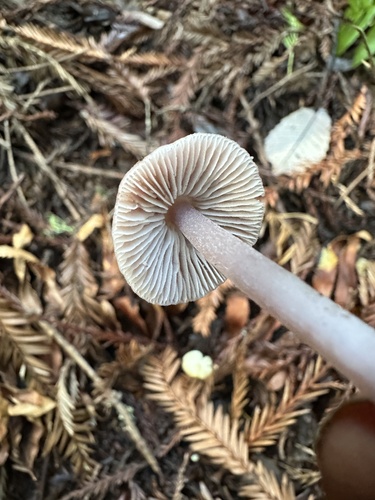
The Lilac Bonnet is a woodland mushroom found in North America and other temperate regions. It grows on the forest floor among leaf litter, often in broadleaf or conifer woods.
 How to recognize it
Its cap is often lilac or pinkish, though its color can vary, and it may have a radish-like smell. Unlike the similar species listed, it lacks the red or white fluid seen when some are cut, and it does not have the notably sticky surface of Mycena epipterygia.
 When to see it
Lilac Bonnet is seen most often in Sep, Oct. There are 51305 public records of it worldwide.
 Questions
It’s seen most often in Sep, Oct.
Its cap is often lilac or pinkish, though its color can vary, and it may have a radish-like smell. Unlike the similar species listed, it lacks the red or white fluid seen when some are cut, and it does not have the notably sticky surface of Mycena epipterygia.
Do not eat it: it contains muscarine and can cause poisoning.















You may also like

Here to help while we’re tending the farm