

 Open in the Field Guide
We all need a Savior
“For all have sinned and fall short of the glory of God.”
Romans 3:23 (BSB)
None of us can earn our way to God by being good enough. We all need mercy.
 Field Guide · Reptiles and amphibians
Ambystoma macrodactylum

Its skin secretions may be irritating or harmful if ingested, so do not eat it and wash your hands after handling it.
The long-toed salamander is a mole salamander found in western North America, from Alaska and western Canada south into the western United States. It lives in habitats ranging from forests to mountain meadows and breeds in ponds and other still water, often temporary wetlands.
 How to recognize it
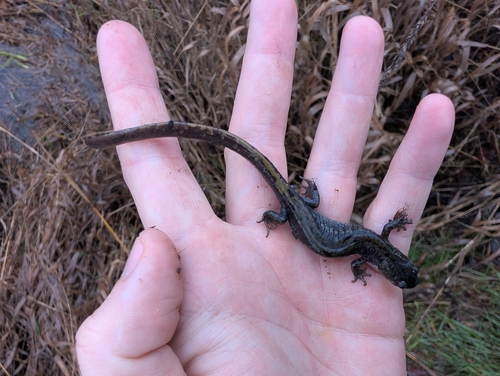
Look for a dark body with a yellow or greenish stripe or mottling along the back and an unusually long outer toe on each hind foot. That long toe helps distinguish it from the spotted, marbled, tiger, and blue-spotted salamanders listed here, which have different body markings.
 When to see it
Long-toed Salamander is seen most often in Apr, Jun, Aug. There are 12359 public records of it worldwide.
 Often recorded near
Public records show Long-toed Salamander most often in the areas around these farms and places:
Seen one? Point the Lavender Passport Field Guide at it and add your find.
 Questions
It’s seen most often in Apr, Jun, Aug.
Public records show it most often around Made In Washington, Synnove Lavender Farm, Trophy Cupcakes, Woodinville Lavender, Betz Family Winery.
Look for a dark body with a yellow or greenish stripe or mottling along the back and an unusually long outer toe on each hind foot. That long toe helps distinguish it from the spotted, marbled, tiger, and blue-spotted salamanders listed here, which have different body markings.
Its skin secretions may be irritating or harmful if ingested, so do not eat it and wash your hands after handling it.















You may also like

Here to help while we’re tending the farm