

 Open in the Field Guide
We all need a Savior
“For all have sinned and fall short of the glory of God.”
Romans 3:23 (BSB)
None of us can earn our way to God by being good enough. We all need mercy.
 Field Guide · Pollinators

Caterpillar hairs may irritate skin, so avoid handling the caterpillars.
Lymantria xylina, also called the casuarina moth, is a moth in the tussock moth family. It occurs in Japan, Taiwan, and the Chinese provinces of Fujian and Guangdong, where its caterpillars feed on plants.
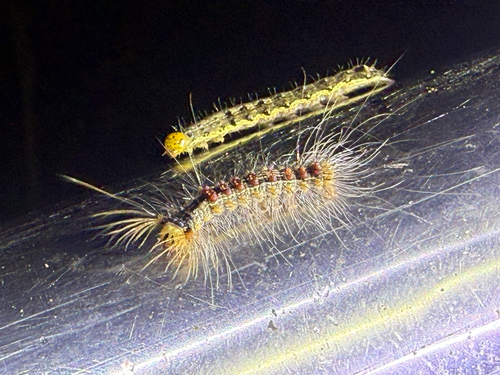
 How to recognize it
Adults are sexually dimorphic: males are brownish and females are paler, with dark markings on the wings. Unlike the rosy gypsy moth (Lymantria mathura), it lacks conspicuous rosy hindwings; other listed Lymantria can be difficult to distinguish without close attention to wing pattern.
 When to see it
Lymantria xylina is seen most often in May. There are 1927 public records of it worldwide.
 Questions
It’s seen most often in May.
Adults are sexually dimorphic: males are brownish and females are paler, with dark markings on the wings. Unlike the rosy gypsy moth (Lymantria mathura), it lacks conspicuous rosy hindwings; other listed Lymantria can be difficult to distinguish without close attention to wing pattern.
Caterpillar hairs may irritate skin, so avoid handling the caterpillars.















You may also like

Here to help while we’re tending the farm