

 Open in the Field Guide
We all need a Savior
“For all have sinned and fall short of the glory of God.”
Romans 3:23 (BSB)
None of us can earn our way to God by being good enough. We all need mercy.
 Field Guide · Plants and flowers
Echium vulgare

The plant contains compounds that can harm the liver if eaten, so keep people and animals from consuming it.
Viper’s-bugloss is a bristly biennial herb native to Europe and western Asia and introduced in North America. It grows in sunny, dry places such as roadsides, fields, and disturbed ground.
 How to recognize it
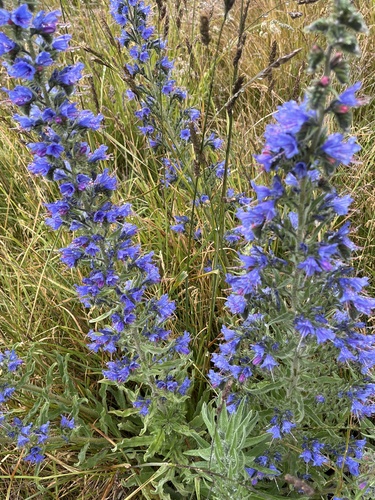
Look for rough, hairy stems and vivid blue flowers with reddish stamens that extend beyond the petals. Related species can have purple or pinkish flowers, while Echium candicans grows as a large shrub.
 In lavender fields
Bees and other pollinators that visit lavender may also forage on viper’s-bugloss flowers.
 When to see it
Viper's-bugloss is seen most often in Jun, Jul. There are 460541 public records of it worldwide.
 Questions
It’s seen most often in Jun, Jul.
Look for rough, hairy stems and vivid blue flowers with reddish stamens that extend beyond the petals. Related species can have purple or pinkish flowers, while Echium candicans grows as a large shrub.
The plant contains compounds that can harm the liver if eaten, so keep people and animals from consuming it.















You may also like

Here to help while we’re tending the farm