


When it arrives
Your plug tray
Plant 72-cell plugs directly into well-weeded, warm soil in late spring, or pot up into 4-inch pots for a few weeks first. Keep moist until new blades appear.
Welcome back.
Forecasts can change. We check destination weather again before live plants leave the farm. Non-plant lavender goods continue shipping normally.
Real dishes from our Field Notes recipes, shared by the people who made them.
Your reaction votes in that category and also adds one equal point to the photo's overall Lavender Crown total.
Category accolades: the photo leading each emoji earns that badge; one photo can earn several. Overall Lavender Crown: all four emoji counts combine, and the highest monthly total wins. Monthly counts restart, but approved photos stay enrolled. Cultivar-confidence votes are separate.
 Lavender companion · grow guide
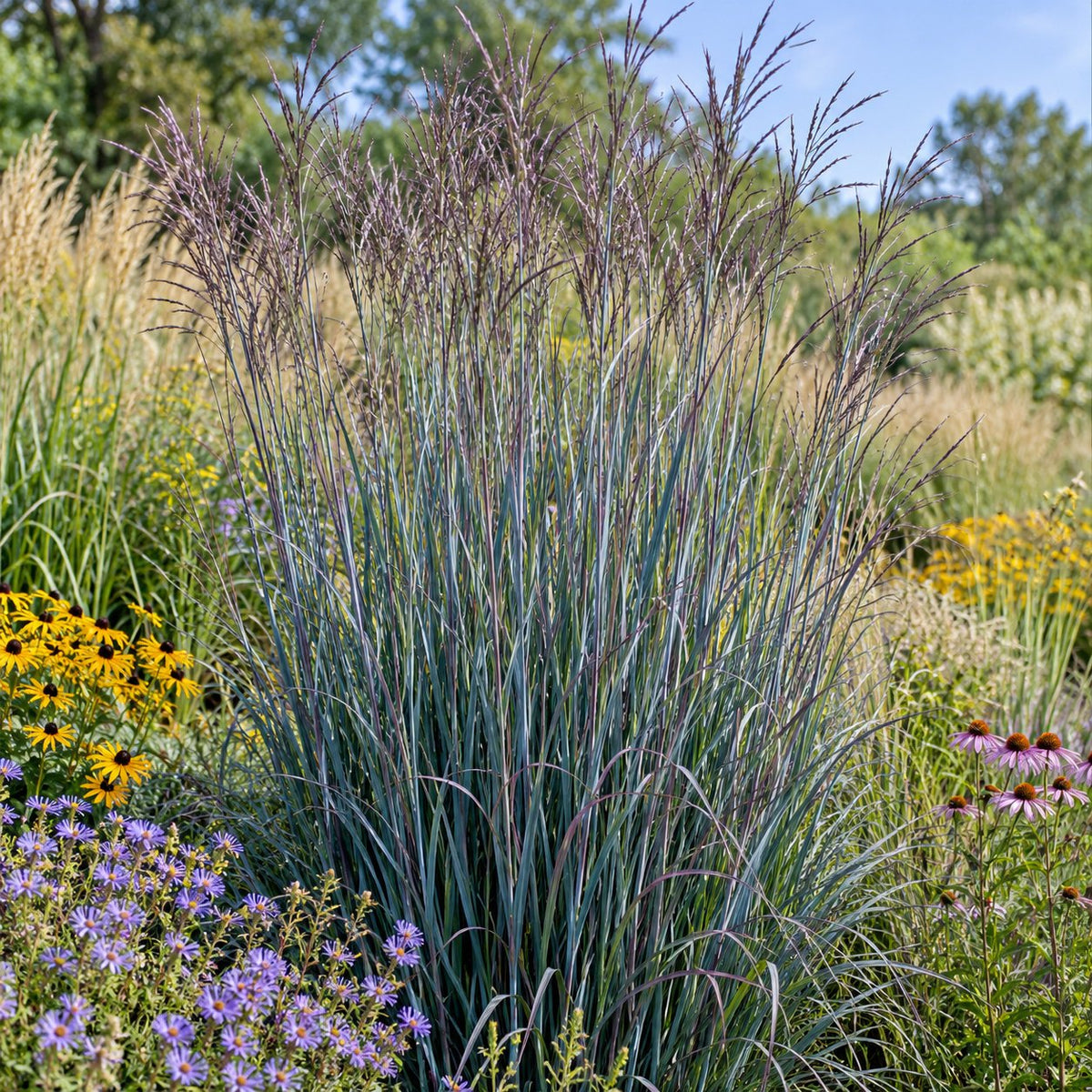
Big Bluestem · Andropogon gerardii
Big bluestem is a tall native prairie grass that wants full sun and room. It thrives in average to lean soil and, once rooted, shrugs off drought; rich soil and shade make it flop.
Check my zone & planting dates

 Full sunLight
 Moderate waterAverage drainage
 pH 5.0–7.5Soil
 Zones 3a–9bHardiness
 54″ tall30″ wide
 ResistantDeer · rabbits some resistance
 Not known toxicPets

Huckleberry saysTell me where you grow and I’ll check if Blue Steel will thrive there.

Hardy in zones 3a–9b
Late spring once soil is warm; it's a warm-season grass that grows strongest in heat.
Your year with Blue Steel
When it arrives
Plant 72-cell plugs directly into well-weeded, warm soil in late spring, or pot up into 4-inch pots for a few weeks first. Keep moist until new blades appear.

Late spring once soil is warm; it's a warm-season grass that grows strongest in heat.

Plant with the top of the plug level with the soil surface; don't bury the growing point.

2–3 feet apart; clumps grow 4–6 feet tall in bloom (shorter selections exist).
Adaptable: sandy, loamy or clay · pH 5.0–7.5
Fix-it tip: Skip the compost and fertilizer. Rich soil makes it grow too tall and flop; lean soil keeps it upright.
Full sun (tolerates very light part shade).
Any real shade leads to weak, leaning stems and less of the blue and red color.


Don’t give up on it
A warm-season grass, it stays brown well into late spring and often shows new green shoots only in May or June. Don't give up on it while cool-season grasses are already green.

Cut old stems down before new growth; be patient, it greens up late.
Rapid growth; flowers appear late summer.

Turkey-foot seedheads and red-bronze foliage color.
Leave standing for structure and wildlife cover.

First season: Water weekly through the first summer until roots go deep.
After that: Drought tolerant thanks to very deep roots; water only in extended drought.

None needed. Fertilizer causes lodging (flopping).

Leave stems up for winter interest and birds. Cut to 4–6 inches in late winter or early spring before new growth starts.

Rarely needed; divide in spring if the clump dies out in the middle.
Very cold hardy (zones 4–9). Leave standing through winter.

Loves heat and humidity; color deepens toward fall.
 Stems flop open in late summer
Likely cause: Too much shade, water or fertility
What to do: Move to full sun, stop feeding; cut back by a third in early June next year
 No sign of life in April
Likely cause: Normal late emergence of a warm-season grass
What to do: Wait until early summer before judging
 Orange powdery spots on leaves
Likely cause: Rust fungus
What to do: Improve air flow; usually cosmetic
Rolled, gray-green leaves in the first season mean thirst; floppy, lush growth means too much water or fertility.


Native grass; not on the ASPCA toxic list.
Deer: resistant · Rabbits: somewhat resistant

Finnegan saysStill not sure what’s wrong? Ask Plant Health — describe it or add a photo.
Possible, with care · 5 gallon+
Deep roots and height make it better in the ground; use a large, heavy pot if you try.

Outdoor plant
A prairie grass that needs full sun and winter dormancy outdoors.
No chill needed
Flowers on current-season growth driven by summer heat and day length.
Plugs from the tray 3–4 inch pots for 3–5 weeks, until roots hold the soil
Garden bed or a 5 gallon pot
3–4 inch pots for 3–5 weeks, until roots hold the soil
Garden bed or a 5 gallon potTime to move up? Slide the plant out: if white roots wrap the outside of the soil, it’s ready for the next size.
Planting with lavender
Plant it near your lavender
Works as a tall backdrop beside or behind a lavender bed in the same full sun. It tolerates the same lean soil but is far bigger, so keep it a few feet back so it won't shade lavender.
 Community Grower Report
Real results from gardeners who grow it, including how it does beside lavender. Answer only what you have experience with.
Loading community reports…
Overall
recommendation
Optional. The farm reads every tip before it appears on this page.
Grower-sourced information. Results reflect real gardens and farms and vary with climate, soil, plant age and care.
Great Lakes Lavender Farm
Use our evidence-led health checker for a practical recovery plan, staff review, or a second opinion from the Grower Community.
Reviews from growers, gardeners and shoppers.
Plants, lavender products, apparel, gifts and growing supplies.



You may also like

Here to help while we’re tending the farm
