


When it arrives
Your 3-inch plug
It arrives actively growing. Water it the day it comes, let it rest in bright shade for 2–3 days, then harden it off for about a week before planting. Set the top of the root ball level with the soil — never deeper.
Welcome back.
Forecasts can change. We check destination weather again before live plants leave the farm. Non-plant lavender goods continue shipping normally.
Real dishes from our Field Notes recipes, shared by the people who made them.
Your reaction votes in that category and also adds one equal point to the photo's overall Lavender Crown total.
Category accolades: the photo leading each emoji earns that badge; one photo can earn several. Overall Lavender Crown: all four emoji counts combine, and the highest monthly total wins. Monthly counts restart, but approved photos stay enrolled. Cultivar-confidence votes are separate.
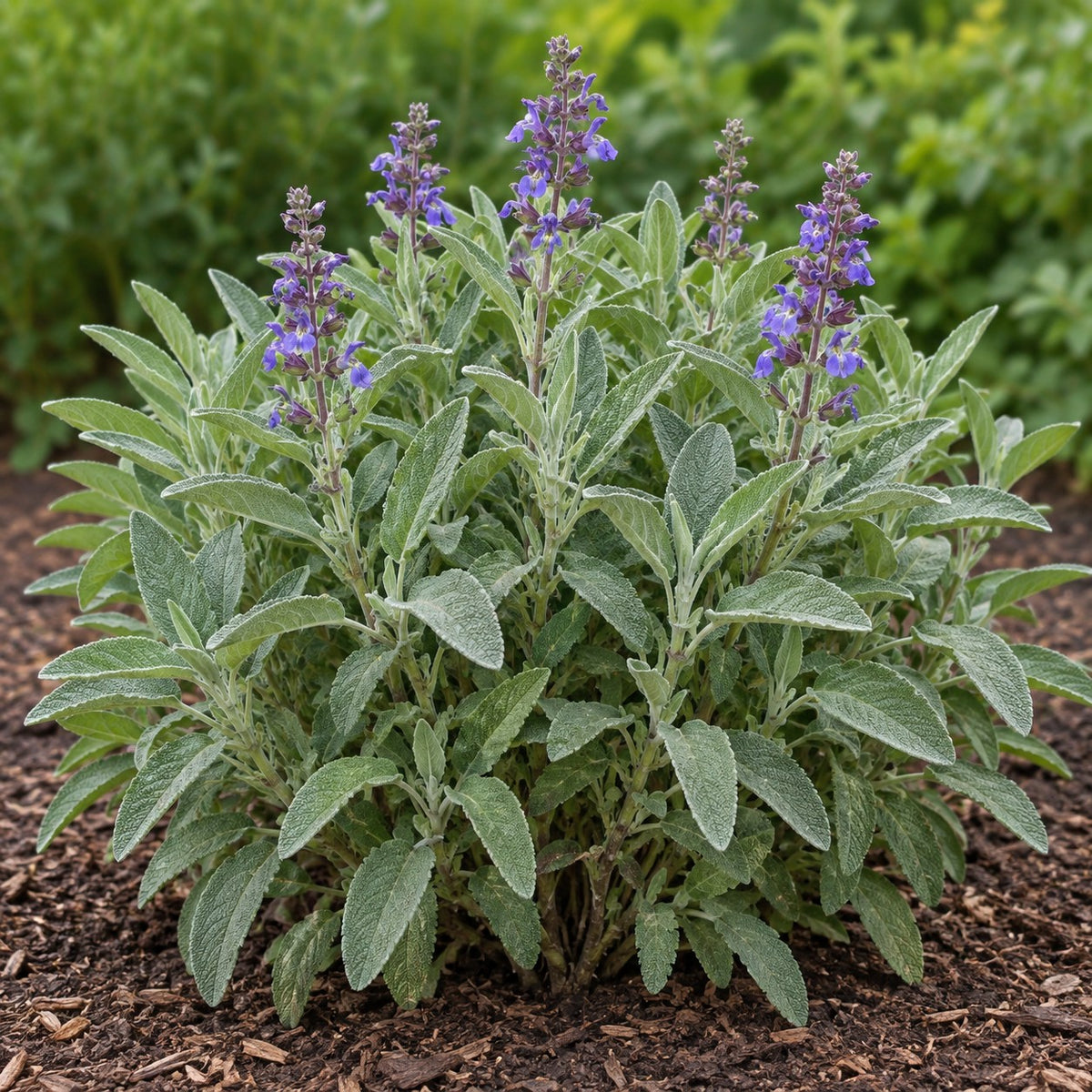
 Lavender companion · grow guide
Perennial Salvia / Russian Sage · Salvia officinalis
Give full sun and well-drained soil. Perennial salvias (S. nemorosa, S. × sylvestris) rebloom when cut back; Russian sage (S. yangii) is a woody, late-waking subshrub pruned only in spring.
Check my zone & planting dates

 Full sunLight
 Low waterFast drainage
 pH 6.0–8.0Soil
 Zones 4a–8bHardiness
 30″ tall36″ wide
 ResistantDeer · rabbits resistant
 Not known toxicPets

Huckleberry saysTell me where you grow and I’ll check if Garden Sage Plants & Plugs will thrive there.

Hardy in zones 4a–8b
Spring is best; early fall works if 6 weeks remain before freeze.
Your year with Garden Sage Plants & Plugs
When it arrives
It arrives actively growing. Water it the day it comes, let it rest in bright shade for 2–3 days, then harden it off for about a week before planting. Set the top of the root ball level with the soil — never deeper.

When it arrives
It arrives growing in its pot. Water on arrival and let it settle in light shade for 2–3 days. Loosen any circling roots and plant with the top of the root ball level with the soil.

Spring is best; early fall works if 6 weeks remain before freeze.

Set the crown level with the soil, never buried.

Perennial salvias 18–24"; Russian sage about 3 ft.
Sandy, gravelly or loamy · pH 6.0–8.0
Fix-it tip: In heavy clay, raise the bed or add grit. Skip rich compost; lean soil gives sturdier stems. Wet winter soil is the main killer.
Full sun (tolerates light shade, with fewer flowers).
6+ hours of sun keeps plants compact. Russian sage especially flops in shade.


Don’t give up on it
Salvia nemorosa types show basal leaves in early spring. Russian sage is late: woody stems look dead until mid- to late spring, when small gray-green buds break. Wait before cutting or removing it.

Cut Russian sage back once buds show.
Shear perennial salvias after the first flush.

Leave stems standing.
Keep soil on the dry side.

First season: Water weekly the first season, letting the top inch dry between waterings.
After that: Drought tolerant once established; water only in long dry spells.

Little to none; heavy feeding causes flopping.

Perennial salvia: when the first flush fades, cut stems back to the leafy base for rebloom. Russian sage: leave stems up in fall; cut to several inches above ground in spring once buds show.

Perennial salvias every 3–4 years in spring if the center opens. Russian sage rarely needs it.
Perennial salvia is hardy to zone 4; Russian sage to zone 5. Don't cut Russian sage back in fall; keep soil from staying wet.

Both thrive in heat and dry air. In humid regions give room for air flow.
 No rebloom
Likely cause: Spent spikes not cut
What to do: Cut back to the leafy base after the first flush
 Stems flop open
Likely cause: Rich soil, shade or overwatering
What to do: More sun, less water, no fertilizer
Russian sage looks dead in AprilLikely cause: Late leaf-out on woody stems
What to do: Wait for buds; then cut back
 Plant died over winter
Likely cause: Wet winter soil
What to do: Replant on a mound in gritty soil
Yellowing leaves and a mushy crown mean too wet. Sprawling stems usually mean too rich or too much water.


ASPCA lists garden sage (S. officinalis) and scarlet sage (S. coccinea) as non-toxic to dogs, cats and horses. Russian sage isn't listed; its aromatic leaves are rarely eaten.
Deer: resistant · Rabbits: resistant

Finnegan saysStill not sure what’s wrong? Ask Plant Health — describe it or add a photo.
Good in pots · 2 gallon+
Perennial salvias do well in pots with gritty mix; Russian sage needs 5 gallon+. Shelter pots in zone 5 winters.

Outdoor plant
Not suited to indoor growing.
Best after a cold winter
Normal winter dormancy supports strong spring growth and bloom.
3-inch plug
1-gallon pot once roots circle the plug
Garden bed or a 2 gallon pot
Potted plant
Garden bed or a pot at least 2 gallonTime to move up? Slide the plant out: if white roots wrap the outside of the soil, it’s ready for the next size.
Planting with lavender
Plant it right alongside lavender
A classic lavender partner: same full sun, fast drainage and low water. Blue and purple spikes bloom alongside lavender and keep color going after it with rebloom.
 Community Grower Report
Real results from gardeners who grow it, including how it does beside lavender. Answer only what you have experience with.
Loading community reports…
Overall
recommendation
Optional. The farm reads every tip before it appears on this page.
Grower-sourced information. Results reflect real gardens and farms and vary with climate, soil, plant age and care.
Great Lakes Lavender Farm
Use our evidence-led health checker for a practical recovery plan, staff review, or a second opinion from the Grower Community.
Reviews from growers, gardeners and shoppers.
Plants, lavender products, apparel, gifts and growing supplies.


You may also like

Here to help while we’re tending the farm
