Savings apply automatically in your cart. Not combined with wholesale pricing.
Re-stocking soon
Live plant delivery check
Where will this plant go?
Five quick steps confirm delivery, growing needs, protection, and the final order path.
Step 1 of 5 · Delivery method
First, choose delivery
How would you like to receive your plants?
You can switch between shipping and farm pickup later.
Location and timing
Where should we check delivery?
We can reuse a ZIP from another GLLF zone tool, your saved delivery choice, or your customer account. You may replace it for this destination.
Your location does not affect farm pickup.Choose an available Wednesday or Friday, 10:00 AM–3:00 PM Eastern. We will confirm that your plants are ready.
Your saved delivery plans
Reuse fulfillment, destination, date, and growing answers. Optional protection is never copied.
Try another option
If plants in pots or plugs cannot ship to your state, your plant and quantity stay saved. Choose farm pickup, enter another delivery ZIP, or shop soil-free bare root plants during their March 1–May 31 shipping window.
We grow to order, so please reserve at least 6 months ahead when you can. Earlier dates are welcome — we'll confirm timing with you. Dates within 30 days are paid in full. Dates 31 days or more out take a 50% deposit, with the balance due two weeks before we ship.
Growing plan
Where will the plant live?
This helps us explain hardiness and seasonal care. You can change the answer for any plant.
Protection
Choose the protection that fits
Your included arrival coverage appears first. Optional plans are never required to buy this plant.
Loading the protection choices…
💜 Plant reservation
Your plants
Add every cultivar and size first. When finished, continue to secure Shopify payment. Production begins only after farm approval; denied orders are refunded.
Use one delivery plan for this reservation
No plants are waiting in this reservation yet.
🛡️
Live plant protection
Choose coverage for this shipment
24-Hour Healthy Arrival
Server confirmation pending for this shipment.
Pending
Optional paid protection
Prices come from a secure quote for this exact plant, quantity, route, date, destination and weather decision. You may continue without either plan.
Complete the delivery review to check optional protection.
The selected 1-Year Grow Guarantee requires Plant Care Academy verification on your signed-in account.Open Plant Care Academy
How weather and protection work
At 32°F or below, or above 90°F, weather-dependent programs are not available for that shipment. Exactly 90°F is advisory and may remain eligible. Your plant purchase remains available when every non-weather requirement qualifies.
Qualifying server-confirmed historical weather is honored for far-future dates and live-weather failures. Browser history is guidance only and cannot authorize a paid plan or price.
Couldn't load pickup availability
Production payment terms
The 50% production deposit reserves greenhouse space and is non-refundable once the order is approved. If an order paid in full is cancelled before fulfillment, the farm keeps 50% and refunds the rest. If Great Lakes Lavender Farm cannot propagate or supply the plants, everything paid is refunded. The remaining balance is due 14 days before the confirmed ship or pickup date. Requested dates may change with crop readiness, weather, or shipping restrictions. Shipped wholesale plants also have the per-tray or per-box handling charge displayed with these terms, plus carrier or freight cost. This handling charge does not apply to local pickup.
For shipped wholesale plants, a $5.00 USD handling charge applies to each 20-cell tray, 72-cell tray, or bare-root box, plus carrier or freight cost. Bare root is normally packed 25 plants per box. Final packaging is confirmed before the remaining balance is collected. This handling charge is separate from optional protection and does not apply to local pickup.
Due todayBalance later
Wholesale Buying Hub
Build your Wholesale reservation
Start with Sharon Roberts Lavender - 72-Cell Plug Tray, mix qualifying varieties,
track minimums and pricing, and coordinate future production in one place.
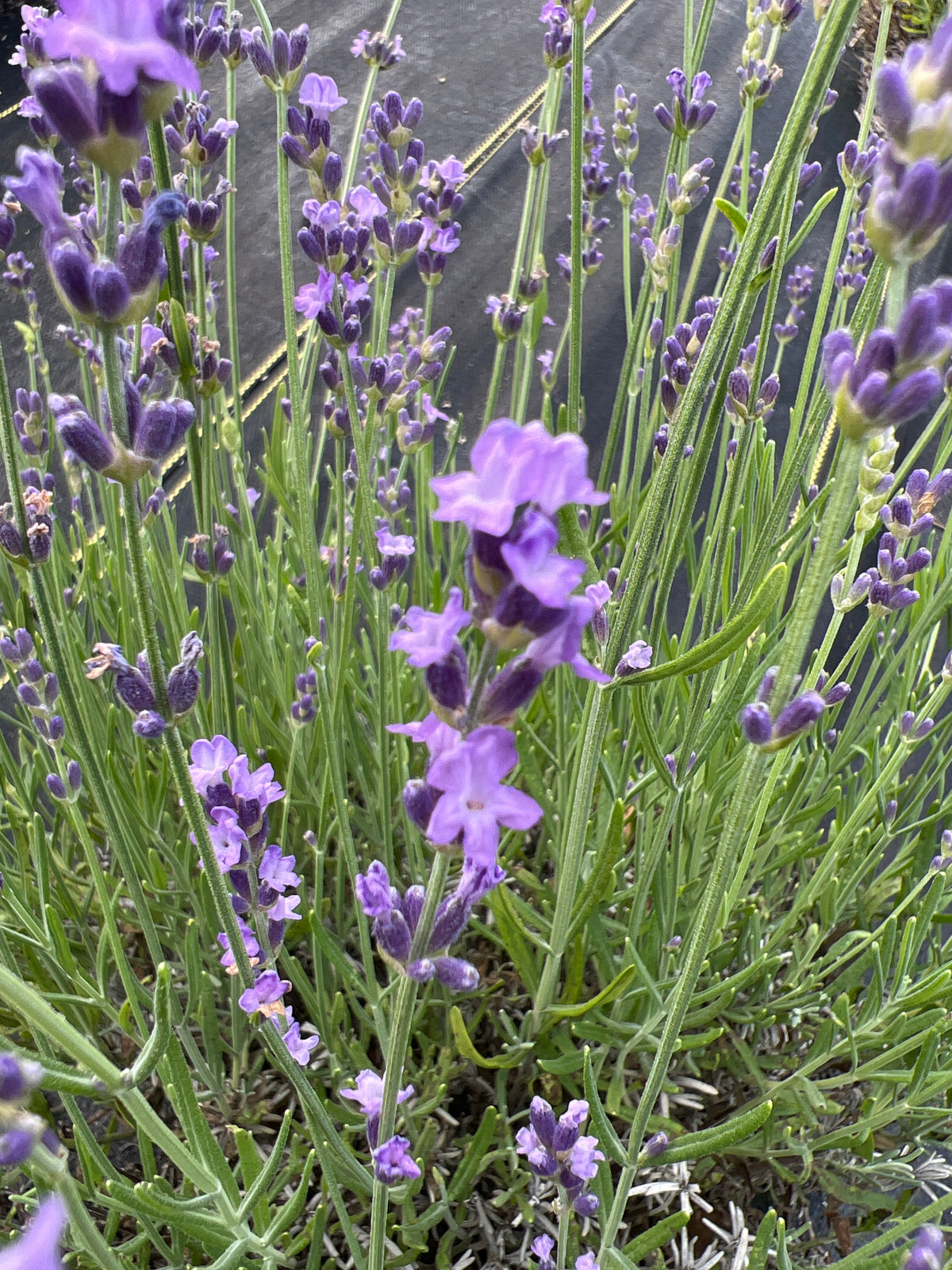
Sharon Roberts lavender (Lavandula angustifolia ‘Sharon Roberts’) is offered here as a 72-cell plug tray. This cultivar is distinguished by purple flowers, green foliage, a upright, relaxed growth habit. Its fragrance profile is described as sweet floral lavender, soft herbaceous notes with low-camphor character.
Heat tolerance: Prefers full sun, heat tolerance varies by cultivar and site. Reduce heat stress with deep establishment watering while preserving fast drainage.
Humidity tolerance: Best with low to moderate humidity, strong airflow, and rapidly draining soil, prolonged wet conditions increase crown/root disease risk.
Winter survival: Temperate-biome species, generally among the hardier cultivated lavenders.
Disease resistance: Lavender is vulnerable to root disease in persistently wet soil, provide excellent drainage and avoid overwatering.
Pollinator value: Great
Deer resistance: Resistant
72-Cell Plug Tray ordering information
This listing contains one complete 72-cell plug tray with 3-inch-deep cells. It is designed for efficient field planting and larger lavender projects; the wholesale minimum is two 72-cell trays.
Lavender performs best in full sun and sharply drained soil. Use the cultivar-specific dimensions and ratings above when planning plant spacing, harvest rows, landscape placement, or commercial production.
Your reaction votes in that category and also adds one equal point to the photo's overall Lavender Crown total.
💜Community FavoriteThe photo you simply love most
📷Best ViewThe strongest composition, setting, or scene
🌱Healthiest VigorStrong visible growth for the plant's age and season
✨Creative GrowingAn inventive pot, trellis, landscape, bed, or field
Category accolades: the photo leading each emoji earns that badge; one photo can earn several. Overall Lavender Crown: all four emoji counts combine, and the highest monthly total wins. Monthly counts restart, but approved photos stay enrolled. Cultivar-confidence votes are separate.
🛡 Automated upload checks, permissions, community confidence, and vote integrity protect each entry.
Mature height
30.0 in
Mature spread
30.0 in
Bloom
Early-June – peak Mid-June
Fragrance
Strong
Deer
Resistant
Lavender grow guide
How to grow Sharon Roberts
English lavender · Lavandula angustifolia
Full sun, fast-draining lean soil and a neutral-to-alkaline pH. The hardiest lavender: it thrives in cold winters if roots stay dry, and needs a yearly trim that never cuts into bare wood.
Huckleberry saysTell me where you grow and I’ll check if Sharon Roberts will thrive there.
34567891011
Hardy in zones 5a–9a
Spring after hard frosts, through early summer, is best in zones 5-6. Fall planting works only if roots have about 2 months to establish before freeze-up (by late August in Michigan).
Your year with Sharon Roberts
JFMAMJJASOND
When it arrives
Your plug tray
Open the box right away and stand the tray in 1/2 in of water for 15-20 minutes, then drain. Keep in bright light or sun. Pot up into 3-4 in pots or plant out once roots hold the plug together. Harden off outdoors 7-10 days first; set the crown at soil level.
When to plant
Spring after hard frosts, through early summer, is best in zones 5-6. Fall planting works only if roots have about 2 months to establish before freeze-up (by late August in Michigan).
How deep
Set the crown (where stems meet roots) exactly at soil level, or slightly high on a mound, never deeper than it grew in the pot. Burying stems invites rot. Top-dress with pea gravel, not bark mulch.
Spacing
18-24 in apart for most cultivars (12-18 in for dwarf types used as edging); rows 3 ft apart for good air flow.
Soil
Lean sandy, gravelly or loamy soil; heavy clay only if raised or mounded · pH 6.5–8.0
Fix-it tip: In clay, plant on a mound or raised bed 8-12 in high and mix in coarse grit or pea gravel, not peat or compost-heavy mixes. If pH is below 6.5, add garden lime per a soil test. Skip rich organic mulch; use gravel.
Sun
Full sun (tolerates light afternoon shade in hot southern climates).
Needs at least 6-8 hours of direct sun. In shade it gets leggy, flowers poorly and is more prone to disease.
Late winter→Late spring
Don’t give up on it
Is it alive? What spring looks like
Evergreen, not truly dormant: the gray foliage often looks dead in March-April. New silvery-green growth starts at stem tips and base in late April to May in zone 5-6. Do the scratch test before giving up on it.
Spring
Wait until new growth shows (mid-late May in zone 5-6), then shape lightly, removing dead tips and keeping green leaves on every stem.
Summer
Main bloom June-July in zone 5-6, often a lighter second flush in late summer. Harvest as buds open. Water only in long dry spells.
Fall
Light tidy after bloom, done by early September in cold zones. No hard pruning or feeding late in the season.
Winter
Evergreen gray foliage that looks dull. Snow cover helps. Keep drainage sharp; don't pile mulch on the crown.
Watering
First season: Water deeply at planting, then about 1 gallon per plant weekly when rain is short through the first summer. Let the top inch dry between waterings.
After that: Drought tolerant from year two. Water only in long dry spells, deeply and at the base, never in the evening on the leaves. Rain is usually enough in the Great Lakes region.
Feeding
Little or none. Lavender does best in lean soil. If growth is weak, give a light dose of slow-release or low-nitrogen fertilizer once in spring. Too much feeding means floppy growth, fewer flowers, and more disease.
Pruning & deadheading
Shear off spent flower stems after bloom, and shape the plant into a mound by about a third. A light spring tidy once new growth appears. Never cut into leafless old wood; it rarely resprouts. Always leave at least 2-3 sets of green leaves on each stem.
Dividing
Do not divide. Lavender is a woody subshrub with one main stem base; division usually kills it. Replace old woody plants with new ones from cuttings or plugs.
Winter
Hardy in zones 5-8 (many cultivars to zone 4 with snow cover). Winter wet, not cold, is the main killer. In windy, snowless zone 5 sites, a loose cover of evergreen boughs helps. Don't prune hard in fall.
Summer heat
Loves heat and sun. Humid summers (Southeast, humid Midwest) are the bigger threat: give good air flow, wide spacing and gravel mulch to keep leaves dry and avoid fungal dieback.
Looks gray and dead in early spring
Likely cause: Normal winter dormancy; leaves dull over winter and new growth starts late
What to do: Wait until mid-to-late May (zone 5-6). Scratch stems: green under bark is alive. Then trim off only truly dead tips.
Whole plant or one side turns gray-brown and collapses in summer
Likely cause: Root or crown rot from wet, heavy soil, overwatering or mulch piled on the crown
What to do: Remove the plant and soil around it. Replant on a gravel-amended mound in full sun and water less.
Woody, splayed center with bare stems
Likely cause: Skipped annual pruning; stems lengthen and split under snow
What to do: Prune yearly, leaving green leaves on each stem. Very old woody plants rarely recover; replace them.
Lots of leaves, few flowers
Likely cause: Too much shade or too much fertilizer or rich soil
What to do: Move to 6-8+ hours of sun, stop feeding, and use leaner, grittier soil.
Too wet or too dry?
Overwatering: yellowing lower leaves, gray-black stem bases, sudden wilting of a whole branch or plant (root rot). Underwatering in year one: soft drooping tips that recover after a drink.
Watch for
Root and crown rot (Phytophthora and others) in wet or heavy soil
Leaf spot and stem blight in humid summers or crowded plantings
Spittlebugs (foamy blobs on stems in spring); rinse off with water
ASPCA lists lavender as toxic to dogs, cats and horses (linalool, linalyl acetate): nausea, vomiting (not in horses) and appetite loss. Nibbling a garden plant rarely causes more; keep concentrated oils away from pets.
Deer: resistant · Rabbits: resistant
Finnegan saysStill not sure what’s wrong? Ask Plant Health — describe it or add a photo.
In a container
Good in pots · 2 gallon+
Use a 12-16 in clay pot with a gritty mix. In zone 6 and colder, potted plants are less hardy than in-ground ones; move the pot to an unheated garage or bury it in the ground for winter.
Indoors
Outdoor plant
A cold-hardy lavender that needs winter chill and strong sun; it declines indoors. Keep it outside year-round, or overwinter potted plants in an unheated garage or cold frame.
Winter chill
Best after a cold winter
Winter chill helps English lavender set a strong flush of flower buds; plants grown without cold often bloom less. Many cultivars rebloom lightly in late summer if deadheaded.
Growing it on
Plugs from the tray
3–4 inch pots for 3–5 weeks, until roots hold the soil
Garden bed or a 2 gallon pot
Time to move up? Slide the plant out: if white roots wrap the outside of the soil, it’s ready for the next size.
Cut into green→A tidy mound
The one rule that matters
The green-wood rule
After the first bloom, cut flower stems plus 1-2 in of leafy growth, shaping a rounded mound. Keep 2-3 sets of green leaves on every stem; never cut into gray, leafless wood. Finish by early September in cold zones.
When to harvest
For fresh bouquets and culinary use, cut when the first 1-2 buds on a spike open. For drying, cut when about half the buds are open. Harvest in the morning after dew dries. For oil, cut at about half bloom.
Cold hardiness
USDA zones 5-8; many cultivars survive zone 4 with reliable snow cover and sharp drainage. The best lavender for Michigan and other cold-winter regions.
In the kitchen
The preferred culinary lavender; sweet, low-camphor flavor. Use buds sparingly in baking, teas, syrups and herb blends.
Essential oil
Source of true lavender oil, rich in linalool and linalyl acetate with little camphor. Sweeter and finer than lavandin oil, but lower yield per plant.
Good companions
Same sunny, dry, lean bed: yarrow, catmint, salvia, Russian sage, coneflower, sedum, thyme, oregano, artemisia, ornamental grasses and roses (if not overwatered).