

Product Field NotesCompanion Plants
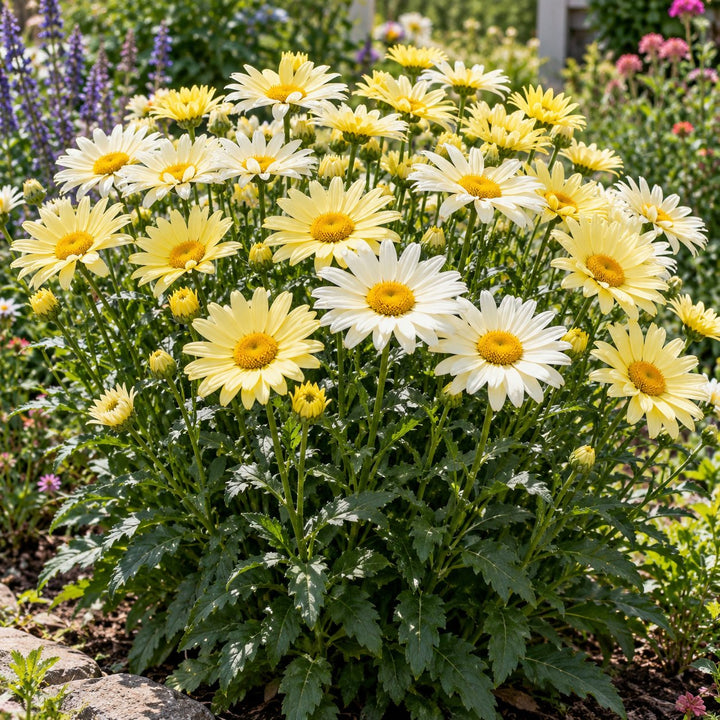
Banana Cream II Shasta Daisy: Lemon and Cream Beside Purple Lavender
 Save
Banana Cream II shasta daisy is an improved take on a favorite yellow shasta. Buds open lemon yellow and slowly brighten to creamy white, so on any given day the plant carries a mix of both colors. Compared with the original, it flowers more heavily, starts earlier and holds its yellow longer.
Next to purple lavender, that soft yellow is a gentler contrast than the usual bright gold, more butter than school bus.
Banana Cream II at a glance
| Trait | What to expect |
|---|---|
| Botanical name | Leucanthemum × superbum 'Banana Cream II' |
| Flowers | Semi-double daisies, lemon yellow aging to creamy white, gold centers |
| Foliage | Glossy dark green, toothed |
| Size | 20 to 24 inches tall, 20 to 22 inches wide |
| Bloom | Starts mid-June, peaks early July, repeat bloom with deadheading |
| Hardiness | USDA zones 5 to 9 |
| Light | Full sun |
| Wildlife | Good for pollinators; moderately deer resistant |
Why it pairs well with lavender
Shasta daisies and lavender want the same things: sun, drainage and no wet feet. Banana Cream II starts blooming in mid-June and peaks in early July, right as English lavender comes into color, so the two overlap instead of taking turns.
Its rounded 2-foot mound is a good height for the front half of a border, where it softens the base of taller lavender without hiding it. Because the flowers shift from yellow to cream, the planting looks a little different each week. Try a drift of three or five plants between lavender groups, leaving air space around each lavender mound.
Planting and care
- Soil: average and well drained. Heavy, wet soil is the main cause of winter loss through crown rot.
- Water: help it through dry spells, but avoid soggy ground, especially in winter.
- Deadheading: snip spent flowers to bring repeat bloom into early fall.
- Fall: cut flowering stems but leave the basal leaves in place over winter.
- Dividing: lift and split clumps in spring every two to three years to keep them vigorous.
Aphids and four-lined plant bugs can mark the leaves now and then; good spacing and airflow keep leaf spot down in humid weather.
Cutting and containers
The stems run about 16 to 22 inches, long enough for a casual jar of daisies and lavender on the kitchen table. Its compact size also suits large containers, as long as the pot drains freely.
About the plug tray
Banana Cream II is offered as a 72-cell plug tray, a good fit for mass plantings, long borders or growers potting up their own plants. See the product page for current availability, and the Wholesale Hub for tray orders.
Frequently asked questions
Will the flowers stay yellow?
No, and that is the charm. Each flower opens lemon yellow and matures to cream, so the plant shows both colors at once.
How is it different from the first Banana Cream?
It is described as heavier flowering, earlier to start and better at holding its yellow color, on a sturdy, dense mound.
Is it hardy in Michigan?
It is rated for zones 5 to 9. In colder or wetter spots, sharp winter drainage makes the difference.

































Share how it went in your field