

Product Field NotesCompanion Plants
Banner of Love Daylily: Peachy Pink Ruffles for a Sunny Lavender Bed
 Save
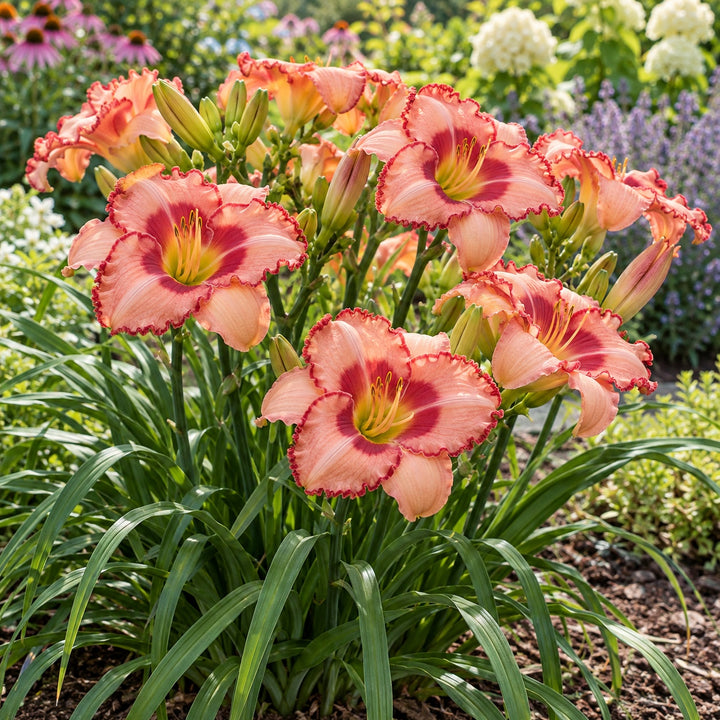
Banner of Love daylily is a compact plant with big personality. Its 5½-inch flowers are a warm peachy pink with a soft rosy red eye and a thin matching red ruffle on the petal edges. The look is romantic, but still bold enough to read from across the yard.
It is also one of the easiest companions you can put near lavender. Both like sun, both handle dry spells once settled, and neither wants pampering.
Banner of Love at a glance
| Trait | What to expect |
|---|---|
| Botanical name | Hemerocallis 'Banner of Love' |
| Flowers | About 5½ inches, peachy pink with a soft red eye and red ruffled edge |
| Foliage | Medium green, arching, semi-evergreen type |
| Size | Scapes to about 24 inches; clump 18 to 24 inches wide |
| Bloom | Starts early July, peaks mid-July, lasts several weeks |
| Hardiness | USDA zones 3 to 9 |
| Light | Full sun to light part shade, at least six hours of sun |
| Deer | Susceptible |
Color play with lavender
Peach and purple are opposite enough to contrast but soft enough to blend. Banner of Love opens in early July, while English lavender is in full color, and its red eye picks up the darker tones in the lavender spikes. The fountain of strap-shaped leaves also gives the bed a different texture from lavender's fine gray foliage.
At about 2 feet tall, it works best behind low lavenders or beside medium ones. Keep a little space between the daylily clump and each lavender plant so the lavender's base stays dry and breezy. The Companion Plant Planner helps you test spacing before you dig.
Planting and care through the year
- Planting: set the bare root crown so it sits about an inch below the soil surface, spread the roots and water well.
- First winter: a light mulch helps prevent heaving; pull it back in spring.
- Summer: each flower lasts one day. Snapping off the spent ones keeps the clump tidy.
- After bloom: cut finished scapes to the base.
- Every few years: divide crowded clumps in spring or late summer.
Leaf streak and leaf spot can appear in wet summers, and soggy soil invites crown rot, which is one more reason the drainage you give lavender suits this daylily too.
A note for pet owners
All parts of daylilies are toxic to cats. If you have cats that roam the garden, plant daylilies where they are less likely to nibble, or choose a different companion.
Frequently asked questions
Does Banner of Love rebloom?
Rebloom is low. Expect one main flush from early July that lasts several weeks, with many buds opening in turn on branched scapes.
Will it handle clay soil?
Once established it copes with clay, heat and dry spells. Just avoid spots where water sits, especially in winter.
Do deer eat daylilies?
Often, yes. Daylilies are rated susceptible, so in deer country you may want fencing or a spot closer to the house.

































Share how it went in your field