

Use & Care NotesCompanion Plants
Born to Run Daylily: Rosy Red Ruffles in the Lavender Border
 Save
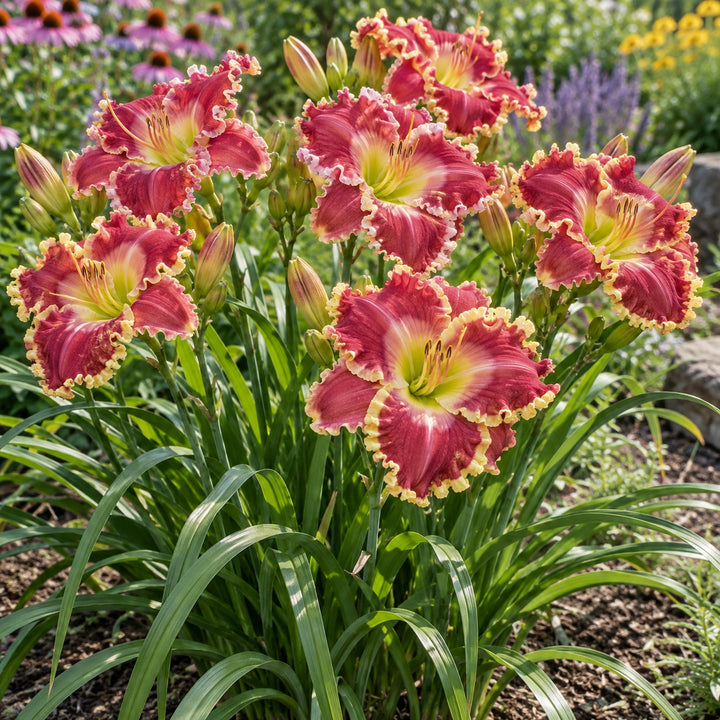
Born to Run daylily has broad, rosy red petals finished with a heavily ruffled, creamy yellow edge. A narrow pale pink band sits above a lime green throat, so each five- to six-inch flower has several colors working together.
Every bloom lasts a single day, but branched stems carry plenty of buds that open in turn through midsummer, and the plant sends up more stems later in the season. It thrives in the same full sun and well-drained soil as lavender, and its warm red is a welcome change of pace in a bed of cool purples.
Born to Run at a glance
| Trait | What to expect |
|---|---|
| Botanical name | Hemerocallis 'Born to Run' |
| Flowers | Rosy red with a ruffled creamy yellow edge, pale pink watermark and lime green throat |
| Flower size | About 5 to 6 inches across |
| Height | Flower stems listed at about 28 inches, often a bit shorter in gardens; foliage about 17 inches |
| Spread | 18 to 24 inches |
| Bloom | Starts early July, peaks late July, with rebloom |
| Hardiness | USDA zones 3 to 9 |
| Foliage | Evergreen type, arching and medium green |
Warm color for a cool-toned bed
A lavender planting is mostly purple, blue and silver. A few clumps of Born to Run add a warm, rosy accent that makes the purples look richer. The cream edge on each petal also picks up the pale tones of white or pink lavenders if you grow them.
Timing is good too. Born to Run starts in early July and peaks in late July, as many English lavenders finish their main flush, so the bed keeps its color after harvest. The arching, strap-shaped leaves add a fountain shape that lavender's mounds do not have. Plant clumps between groups of lavender or behind a front row, and leave enough space that the leaves do not drape over the lavender. The Companion Plant Planner helps with spacing.
Planting and care
- Sun: at least six hours for the best bloom. Light part shade is fine.
- Soil: average and well drained. Once established it handles heat, clay and dry spells.
- Planting bare root: spread the roots, set the crown about an inch below the surface and water deeply.
- Deadheading: snap off faded flowers to keep it neat, and cut spent flower stems promptly after the flush to encourage the later round.
- Dividing: split crowded clumps every few years.
- Winter: reliably hardy in Michigan within its zone range. A light mulch the first winter and good drainage help prevent crown rot and heaving.
Daylilies are generally trouble-free, though leaf streak and leaf spot can appear in wet summers, and blooms may spot after rain. Deer do browse daylilies, so protect them in deer country.
Ordering format
Born to Run is offered as a bare root plant. See the product page for current availability.
Frequently asked questions
Is Born to Run fragrant?
Some descriptions note a light fragrance, but it is not a plant to grow for scent. Let the lavender handle that.
Is it a good cut flower?
Not really. Each flower lasts only a day, so it is best enjoyed in the garden.
What does evergreen mean for a daylily in Michigan?
Evergreen types keep some foliage longer into winter in mild climates. Here the leaves will still die back in the cold; clean them up in spring.
Keep exploring
Ready to plant it?
Sizes, prices and shipping times are on its page.

















Share how it went in your field