

Product Field NotesCompanion Plants
Desert Plains Fountain Grass: Fall Fire for a Lavender Border
 Save
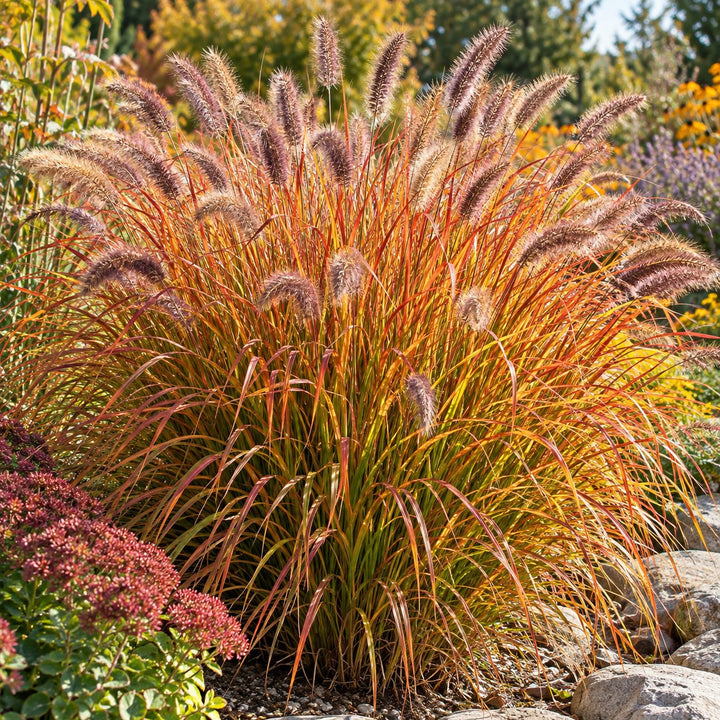
Desert Plains fountain grass is a large, upright grass with fine, narrow leaves in a vase-shaped clump 3 to 4 feet tall and wide. In midsummer the leaf tips start turning deep red; by fall the whole clump glows orange, gold and russet. In late August and September, fuzzy 5-inch bottlebrush plumes open smoky purple above the leaves and age to soft tan. It was even selected right here in southwest Michigan.
Desert Plains at a glance
| Trait | What to expect |
|---|---|
| Botanical name | Cenchrus alopecuroides 'Desert Plains' (also listed as Pennisetum) |
| Plumes | Smoky purple bottlebrushes aging to tan, about 5 inches long |
| Foliage | Green, turning red, orange and gold from August into fall |
| Size | 3 to 4 feet tall and wide |
| Bloom | Starts late August, peaks mid-September, plumes last into early winter |
| Hardiness | USDA zones 5 to 9 |
| Light | Full sun |
| Deer | Resistant |
Why a grass belongs near lavender
Lavender beds are at their best in June and July. By September, the lavender has been sheared into tidy gray mounds and the bed can look a little quiet. Desert Plains fills that gap. Its purple plumes echo lavender's color just when lavender is done, and its warm fall foliage makes the gray lavender mounds look silver by contrast. Through winter, the tan plumes and standing leaves give the bed structure and movement.
Both plants love full sun and dislike wet winter soil, so they grow well side by side. Because the grass gets 3 to 4 feet wide, plant it behind lavender or at the ends of rows, not between closely spaced mounds. Try it in the Companion Plant Planner.
Care
- Soil: average to fertile and well drained. It tolerates dry spells once established.
- Sun: full sun gives the best plumes and fall color.
- Winter: leave the foliage standing to protect the crown. Wet, poorly drained winter soil is the main cause of loss.
- Spring: cut the whole clump back to a few inches before new growth starts.
- Problems: very few; leaf spot is occasional.
Cutting and containers
The plumes are good for cutting and fair for drying. A few fuzzy stems tucked into a fall arrangement with dried lavender add softness and a hint of purple. In a large container, a single plant makes a bold fall centerpiece on a sunny patio.
Desert Plains is offered as a full 72-cell plug tray, a good fit for mass plantings, screens and long borders. See the product page for current availability, or browse the Wholesale Hub.
Frequently asked questions
Will it self-seed everywhere?
Fountain grass can drop some seed. Cut plumes before they shatter in winter if you want to limit seedlings.
How is it different from smaller fountain grasses?
Desert Plains is nearly twice as tall as compact types, more upright and vase-shaped, and it colors earlier and more reliably in fall.
Do pollinators use it?
Not much. Grasses are wind pollinated, so let the lavender feed the bees while the grass provides structure.

































Share how it went in your field