

Use & Care NotesLavender Plants
James Compton Lavender: A Full-Size Butterfly Lavender for Fragrance
 Save
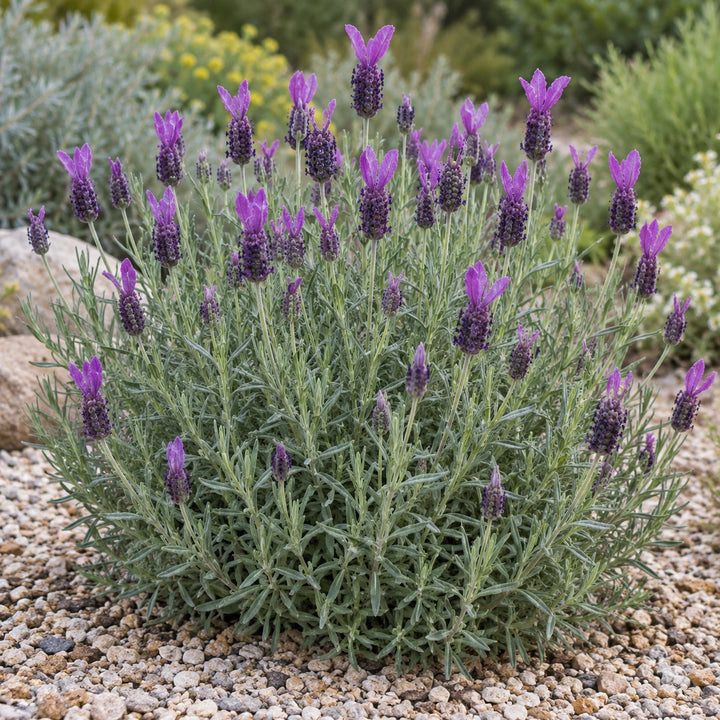
James Compton lavender is a butterfly lavender with real presence. Where many of its relatives stay under a foot, this one builds a bushy, compact shrub about 24 inches tall and wide, covered in purple flower heads and flags over gray-green foliage. Its fragrance is rated strong.
It is Lavandula pedunculata 'James Compton', rated for USDA zones 7a to 9b. That is warmer than most of Michigan, so up here it is a large container plant or a generous annual, while gardeners in zone 7 and warmer can grow it as a lasting shrub.
James Compton at a glance
| Trait | What to expect |
|---|---|
| Botanical name | Lavandula pedunculata 'James Compton' |
| Flower color | Purple heads with purple flags |
| Foliage | Gray-green |
| Size | About 24 inches tall and 24 inches wide |
| Bloom | Starts early May, peaks late May, with high rebloom |
| Hardiness | USDA zones 7a to 9b |
| Water needs | Low once established |
| Fragrance | Strong; bold resinous-herbal with camphor and eucalyptus-like notes |
Big plant, bold scent
James Compton's best use is fragrance. The whole plant is resinous and herbal, with the camphor and eucalyptus notes typical of butterfly lavenders, and at two feet across there is a lot of it to brush past. Put it beside a front walk, a garden bench or a pool deck where warm afternoons bring the scent out.
Its size also makes it a good single specimen in a big urn or half barrel. One plant fills the pot, and the purple flags float over the gray-green leaves from spring into summer. Pollinators rate it great, and deer generally leave it alone.
Growing it well
- Sun: full sun all day if you can manage it.
- Soil: lean, gritty and fast-draining. In containers, choose a pot at least 16 to 18 inches across with large drainage holes.
- Water: steady water while it settles in, then only when the top couple of inches are dry.
- Deadheading: remove faded heads to keep the repeat bloom coming.
- Shaping: after a flush, trim lightly to keep the shrub dense. Avoid cutting into old bare wood.
The Plant Care Guide covers soil mixes for lavender in containers.
Winter strategy
In zone 7a and warmer, plant it in the ground where winter rain drains away quickly; wet soil is a bigger threat than cold. Its listing notes that cold tolerance depends on conditions, so a sheltered, sunny, dry spot helps. In colder zones, bring the pot in before a hard freeze to a cool, bright space and water lightly until spring. A large plant takes some room, so plan where it will spend the winter before fall arrives. Check your zone with the USDA Zone Finder.
Cutting and formats
Its fresh and dried flower ratings are good. Cut stems when the flags have opened for small bouquets, or dry heads for sachets and potpourri where its piney scent works well. Its oil rating is weak, and it is not recommended for cooking, so think of it as a garden and fragrance plant.
It is listed as a 3-inch plug, 4-inch pot or 1-gallon pot. For a big container this season, a gallon gives the quickest results. See the product page for current sizes and availability, and use Availability Alerts if it is not available right now.
Frequently asked questions
How is it different from smaller butterfly lavenders?
Mostly size. James Compton reaches about two feet tall and wide, so it reads as a shrub rather than a pot filler.
Can I cook with James Compton?
No. It is grown for ornament and fragrance. Choose a culinary-rated English lavender for the kitchen.
Does it bloom the first year?
Yes. Butterfly lavenders do not need a cold winter to flower, so young plants bloom the season you plant them.
















Share how it went in your field