

Lemon Thyme: Citrus-Scented Thyme for the Front of the Bed
 Save
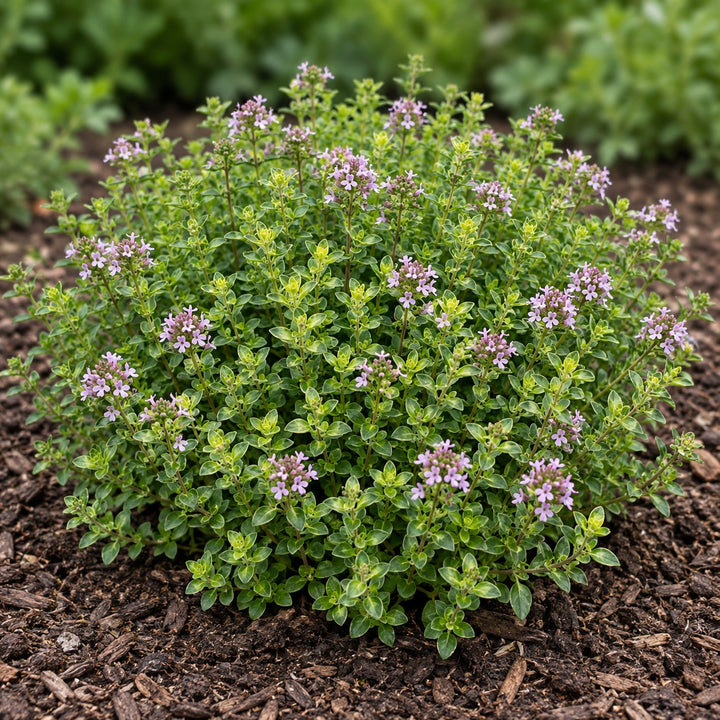
Lemon thyme smells like someone squeezed a lemon over the thyme patch. It makes a compact, rounded mound of small mid-green leaves with a clear citrus scent layered over classic thyme, and in summer it opens clusters of tiny mauve-pink to pale lilac flowers that bees and butterflies visit steadily.
It is low, evergreen and tough, and it lives happily at the feet of lavender.
Lemon thyme at a glance
| Trait | What to expect |
|---|---|
| Botanical name | Thymus × citriodorus |
| Leaves | Mid-green, small and oval, lemon-scented; evergreen |
| Flowers | Mauve-pink to pale lilac, tiny, in clusters at the stem tips |
| Size | 6 to 12 inches tall and wide |
| Bloom | Starts early July, peaks mid-July |
| Hardiness | USDA zones 5a to 8b |
| Water | Low |
| Wildlife | Great for pollinators; tolerates deer and rabbits |
Lemon thyme with lavender
Lemon thyme tolerates heat and drought, and it rots in soil that stays too moist, which is the same set of rules lavender lives by. That makes it one of the few herbs you can tuck right into the lavender bed: along the front edge, between stepping stones on a sunny path or in the gaps of a gravel garden.
Its flowers open in early to mid-July, overlapping the peak of English lavender bloom, so the bed fills with soft pink below and purple above. The scent pairing is a bonus: lemon and lavender are a favorite combination in the kitchen, too. Try layouts in the Companion Plant Planner.
Planting and care
- Soil: sharply drained. Sandy, gravelly or raised beds work best.
- Water: while it establishes, then only in long droughts.
- Trimming: cut back after flowering to keep it compact. It gets more open with age.
- Winter: it is rated hardy to zone 5a, the edge of its range in much of Michigan. Drainage and a loose cover such as evergreen boughs after the ground freezes help it through.
- Containers: it is a good pot plant; bring the pot to a sheltered spot in the coldest weather.
Cooking with lemon thyme
Use it anywhere regular thyme goes when a lemon note would be welcome: roast chicken, fish, vegetables, marinades and vinaigrettes. The leaves and flowers can be eaten raw in salads, and a few sprigs steeped in hot water make a bright herbal tea. Snip sprigs as needed; regular harvests keep the plant tidy.
Lemon thyme also dries well. Hang small bundles in a shaded, airy place and strip the leaves once crisp.
Sizes offered
Lemon thyme comes as 3-inch plugs, 4-inch pots and 1-gallon pots. Plugs make an affordable edging along a lavender row. See the product page for current sizes and availability.
Frequently asked questions
Is lemon thyme as hardy as English thyme?
A little less. English thyme is rated to zone 5a through 9b, and lemon thyme to zone 5a through 8b, with zone 5 at the edge. Sharp drainage matters most.
Does the lemon scent fade when cooked?
It softens with long cooking, so add some fresh leaves at the end for the brightest flavor.
















Share how it went in your field