

Use & Care NotesLavender Plants
Mitcham Gray Lavender: Dark Violet Spikes Over Gray Leaves
 Save
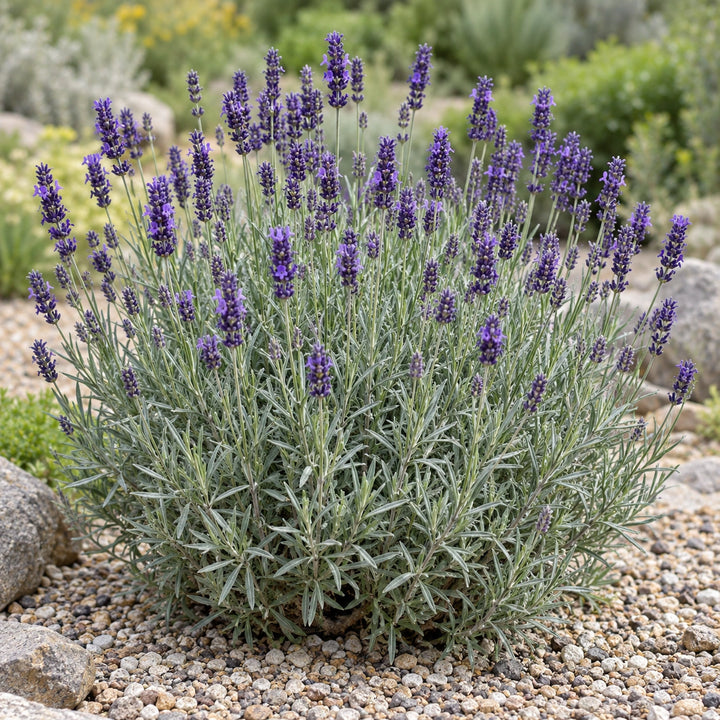
Mitcham Gray lavender, also known simply as Mitcham, is a semi-dwarf English lavender with some of the best contrast in the garden: dark violet flower spikes over distinctly gray foliage. It stays compact, about 21 inches tall and 19 inches wide, slightly taller than it is wide.
The name nods to Mitcham, the district south of London that was once known for its lavender fields.
Mitcham Gray at a glance
| Trait | What to expect |
|---|---|
| Botanical name | Lavandula angustifolia 'Mitcham Gray' |
| Flower color | Dark violet |
| Foliage | Gray |
| Habit and size | Compact, semi-dwarf; about 21 inches tall and 19 inches wide |
| Bloom | Starts late June, peaks mid-July, moderate rebloom |
| Hardiness | USDA zones 6a to 9b |
| Fragrance | Sweet floral, soft herbal, low camphor |
| Culinary | Rated great |
The appeal of gray foliage
Many lavenders have gray-green leaves; Mitcham Gray leans fully gray. That cooler foliage makes the dark violet flowers look even deeper, and it keeps the plant attractive before and after bloom. It is a natural fit for gravel gardens, silver-themed borders and herb beds where you want texture as well as color. Pair it with green-leaved lavenders and the difference in foliage tone becomes part of the design. Its upright, slightly narrow shape, a little taller than it is wide, also lets it slip into tight spots between larger plants. Bees work the dark spikes all through bloom, and deer usually leave it alone.
Getting it through winter
Mitcham Gray is rated for zones 6a to 9b. Gardeners in zone 6 and warmer can plant it in the ground with confidence, provided the soil drains well. In colder spots, choose the warmest microclimate you have: a south-facing bed, the base of a wall or a slope where water never lingers. A raised bed with gritty soil helps a great deal.
Not sure which zone you are in? The USDA Zone Finder will tell you in seconds.
Planting and care
- Sun: full sun, the more the better.
- Soil: lean and fast-draining. Avoid rich, moisture-holding beds.
- Spacing: about 18 to 20 inches, close to its mature width.
- Water: deeply during the first season, then sparingly; water needs are low.
- Pruning: trim after the mid-July peak to keep the upright shape. Stay in the leafy growth.
- Mulch: use gravel or nothing near the crown rather than wood chips or compost.
Harvesting and uses
Mitcham Gray is rated great for culinary use, with the sweet, low-camphor profile cooks look for. Harvest buds when they are fully colored and only a few flowers are open. Dry them in a shaded, airy spot, rub them off the stems and store airtight. Use only plants grown and handled as a food crop, and start with small amounts. The dark buds also look handsome in sachets and small dried bundles.
It is offered as 3-inch plugs, 4-inch pots and 1-gallon pots. See the product page for current sizes and availability.
Frequently asked questions
Is Mitcham Gray hardy in zone 5?
It is rated for zones 6a to 9b. In zone 5 gardens, consider a more cold-tolerant English lavender or give it your most sheltered, best-drained spot.
Are Mitcham and Mitcham Gray the same plant?
Yes. Mitcham is listed as a synonym for Mitcham Gray.
How does it compare to other compact English lavenders?
It is notable for its gray foliage and dark violet flowers. The Compare tool shows size, bloom and color side by side.
















Share how it went in your field