

Use & Care NotesLavender Plants
New Zealand Blue Lavender: Early Violet-Blue on Green Foliage
 Save
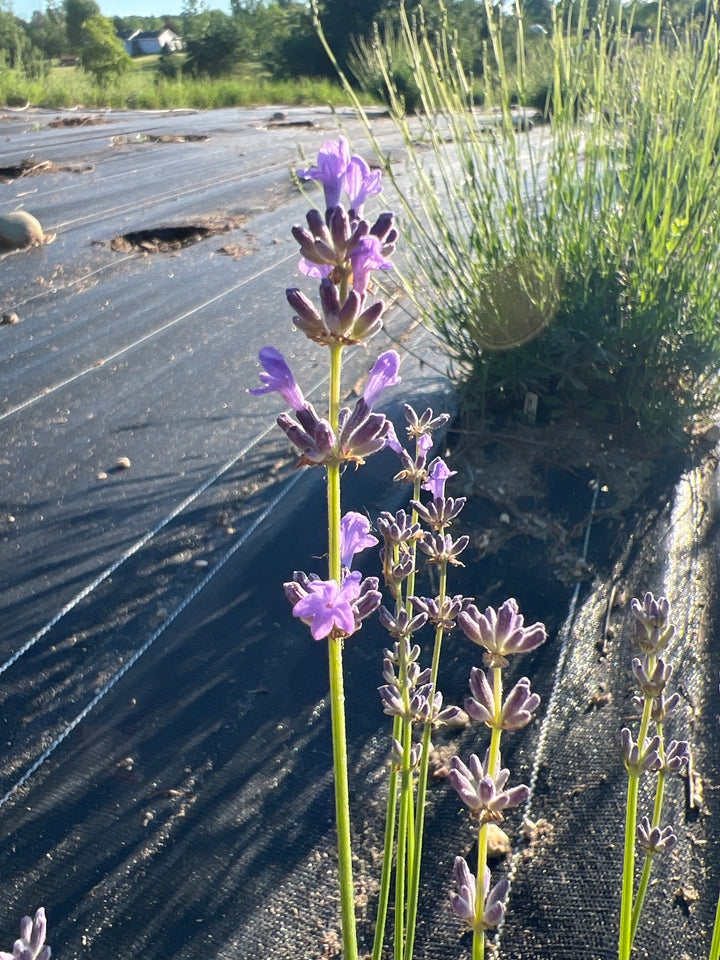
New Zealand Blue lavender is a newer English lavender, introduced in 2015, with fragrant violet-blue flowers and foliage that leans green rather than gray. It grows into an evergreen shrub about 24 inches tall and 36 inches wide and flowers early, starting in early June and peaking by mid-June.
Its stems run about 10 to 12 inches, long enough for easy bundles without the sprawl of a big lavandin.
New Zealand Blue at a glance
| Trait | What to expect |
|---|---|
| Botanical name | Lavandula angustifolia 'New Zealand Blue' |
| Flower color | Violet-blue |
| Foliage | Green, evergreen |
| Size | About 24 inches tall and 36 inches wide; stems 10 to 12 inches |
| Bloom | Starts early June, peaks mid-June, moderate rebloom |
| Hardiness | USDA zones 5a to 9a |
| Fragrance | Sweet floral, soft herbal, low camphor |
| Introduced | 2015 |
An early start to lavender season
New Zealand Blue is one of the first English lavenders to color up. That early timing has practical perks. You can harvest culinary buds before the main midsummer rush, you get color in the garden while later cultivars are still in bud, and a light shearing after the first flush often brings a smaller second round. Plant it with mid- and late-season lavenders to keep something in bloom for months; the Lavender Bloom Calendar makes planning easy.
Green foliage in the garden
Most lavenders read silver or gray-green. New Zealand Blue's greener leaves give it a fresher look and make a nice transition between lavender and green-leaved perennials or shrubs. Against that green, the violet-blue flowers look saturated and bright. Repeat a few plants along a border for rhythm, or use it as a low informal hedge.
Planting and care
- Sun: full sun, six to eight hours or more.
- Soil: sandy, loamy or gravelly, and fast to drain. Raise the bed in heavy clay.
- Spacing: about three feet apart, close to its mature width.
- Water: deeply when the top few inches dry during the first season, then sparingly.
- Feeding: light. Rich soil makes soft, floppy growth.
- Pruning: shear after the June bloom, cutting into leafy growth but not bare wood. Tidy again after any rebloom.
Harvest and uses
New Zealand Blue is rated great for culinary use. Harvest buds in early to mid-June when they are fully colored but before most flowers open. Hang small bundles in a dark, airy spot, then rub off the buds and store them airtight. Use only plants grown and handled as a food crop, and start with small amounts. The 10 to 12 inch stems are a comfortable length for dried bundles and small bouquets, and its essential oil suitability is rated excellent.
Pollinators find it early in the season, and deer tend to leave it alone.
It is offered as 3-inch plugs, 4-inch pots and 1-gallon pots. See the product page for current sizes and availability.
Frequently asked questions
Why is the foliage greener than my other lavender?
New Zealand Blue has green foliage rather than the gray-green typical of many English lavenders. That is a trait of the cultivar.
When should I harvest it?
Because it blooms early, harvest is usually in June. Cut when buds are colored and only a few flowers are open.
Is it hardy in Michigan?
It is rated for zones 5a to 9a. Plant it in well-drained soil, which matters more than cold in Great Lakes winters.
















Share how it went in your field