

Use & Care NotesLavender Plants
Olympia Lavender: Dark Blue-Violet Lavandin in a Smaller Size
 Save
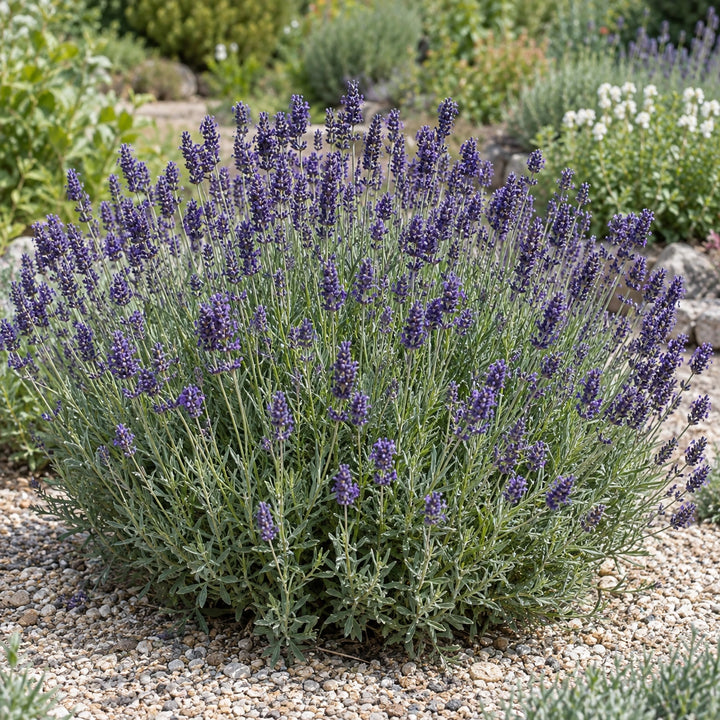
Olympia lavender is a lavandin, Lavandula × intermedia, with a darker color and a more modest size than many of its relatives. Its spikes are dark blue-violet to dark purple, set over silver-green to gray-green foliage on a bushy, mounding, upright plant about 24 inches tall and 36 inches wide.
Most lavandins want a lot of room. Olympia gives you lavandin vigor, fragrance and oil in a footprint closer to a large English lavender.
Olympia at a glance
| Trait | What to expect |
|---|---|
| Botanical name | Lavandula × intermedia 'Olympia' |
| Parentage | L. angustifolia × L. latifolia |
| Flower color | Dark blue-violet to dark purple |
| Foliage | Silver-green to gray-green |
| Size | About 24 inches tall and 36 inches wide |
| Bloom | Starts mid-July, peaks early August, one main flush |
| Hardiness | USDA zones 5a to 8b |
| Ratings | Excellent for oil, cut flowers, dried flowers and pollinators |
A darker lavandin
Many lavandins bloom in paler blues and lilacs. Olympia's deeper color stands out in a border, and it dries to a rich tone that looks good in bundles and sachets. Use it where you want the late-summer presence of a lavandin without a three-foot-tall shrub: along a front walk, in a smaller cottage garden or in a row at the front of a taller lavandin planting.
Because it peaks in early August, Olympia also picks up after most English lavenders finish. Check the Lavender Bloom Calendar to plan an overlapping sequence.
Planting and care
- Site: full sun and lean, fast-draining soil. Raise beds or mound rows in clay.
- Spacing: about three feet apart; it spreads wider than it is tall.
- Water: deeply during the first season, then rarely. Water needs are low.
- Feeding: skip it. Rich soil makes lavandins floppy.
- Winter: drainage is the key to survival. Keep wet mulch and leaves off the crown.
Harvest and pruning
Olympia puts on one main flush, so time your harvest well. For dried bundles, cut on a dry morning when about a third to half of the flowers on each spike have opened. Hang small bunches upside down in a dark, airy place to hold that deep color. After harvest, prune the plant into a rounded mound, cutting into the leafy growth but not into bare old wood. The Pruning Calendar has the timing.
Uses
Olympia is rated excellent for essential oil and high oil production, excellent for fresh and dried flowers and excellent for pollinators. Its fragrance is a strong floral-herbal lavandin scent, sweet lavender layered with fresh camphor notes, which makes it a good choice for sachets and drawer bundles. It is rated good for culinary use, though lavandin is stronger and more camphor-forward than English lavender, so most cooks use it sparingly or not at all. Deer tend to avoid it.
It is offered as 3-inch plugs, 4-inch pots and 1-gallon pots. See the product page for current sizes and availability.
Frequently asked questions
Is Olympia smaller than other lavandins?
At about 24 inches tall and 36 inches wide, it is more compact than many lavandins, which often reach about three feet tall.
Will it rebloom?
Rebloom is low. Expect one main show from mid-July into early August.
Is it hardy in zone 5?
It is rated for zones 5a to 8b. Good drainage matters most in cold, wet winters.
















Share how it went in your field