

Product Field NotesCompanion Plants
Peachberry Ice Coral Bells: A Wide Peach Cushion With Pink Flashes
 Save
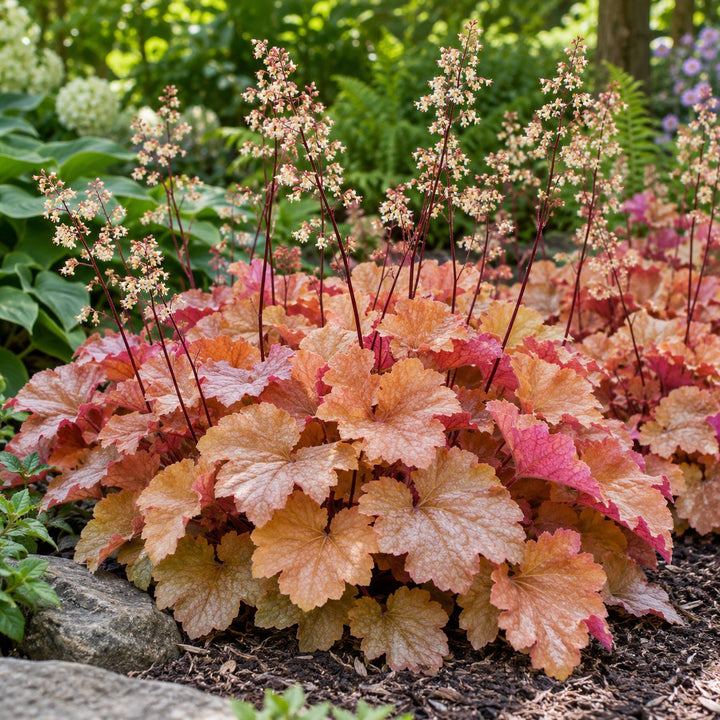
Peachberry Ice coral bells grows low and remarkably wide: just 8 to 10 inches tall but up to nearly 3 feet across. Its large, rounded leaves are apricot orange with a fine silver overlay, and deep ruffles flip the edges up to flash bright pink undersides. The orange is strongest on fresh spring growth, mellows to peach in summer and deepens toward red as the weather cools.
In midsummer, burgundy stems hold loose sprays of tiny cream flowers above the cushion.
Peachberry Ice at a glance
| Trait | What to expect |
|---|---|
| Botanical name | Heuchera 'Peachberry Ice' |
| Foliage | Apricot orange with silver overlay and pink undersides |
| Flowers | Airy cream sprays on burgundy stems 24 to 30 inches tall |
| Size | 8 to 10 inches tall, 30 to 34 inches wide |
| Bloom | Starts late June, peaks mid-July |
| Hardiness | USDA zones 4 to 9 |
| Light | Full sun to full shade; morning sun gives the brightest orange |
| Heat | Documented as resistant to high heat and humidity |
Warm color at the lavender's edge
Peach and apricot are lovely next to lavender's gray-green leaves and purple flowers, and the silver overlay on Peachberry Ice ties right into lavender's silvery tone. The catch is that coral bells want a bit more moisture than lavender and appreciate some shade in the afternoon. The sweet spot is a transition strip: the edge of a lavender bed that falls into shade from a house or tree after lunch, or a path border just outside the lavender's driest ground.
Because it spreads so wide, a few plants cover a lot of edging. Sketch it in the Companion Plant Planner before you plant.
Planting and care
- Light: it takes full sun to full shade, but morning sun brings out the brightest orange.
- Soil: average to fertile and well drained. Crown rot in wet soil is the main problem.
- Water: keep it watered during dry periods; water at the base.
- Grooming: trim spent flower stems and clean up worn leaves in early spring.
Winter and frost heave
It is evergreen to semi-evergreen in Michigan, so the cushion often carries color through winter. Freeze-thaw cycles can push crowns up in heavy or wet soil: plant crowns at soil level, mulch after the ground freezes and press any heaved plants back down in spring.
Containers and mass plantings
A single plant makes a bold, warm accent spilling over a large pot. For edging or mass plantings, the 72-cell plug tray covers a lot of ground, while the 20-cell plug tray suits a smaller bed. See the product pages for current availability.
Frequently asked questions
Why did my leaves change color?
That is expected. New spring growth is the most orange, summer leaves soften to peach and fall color deepens toward red.
Will deer eat it?
It is moderately deer resistant, so damage is usually limited.















Share how it went in your field