

Product Field NotesCompanion Plants
Peachie Keen Hummingbird Mint: A Peach Dome for Hot, Dry Beds
 Save
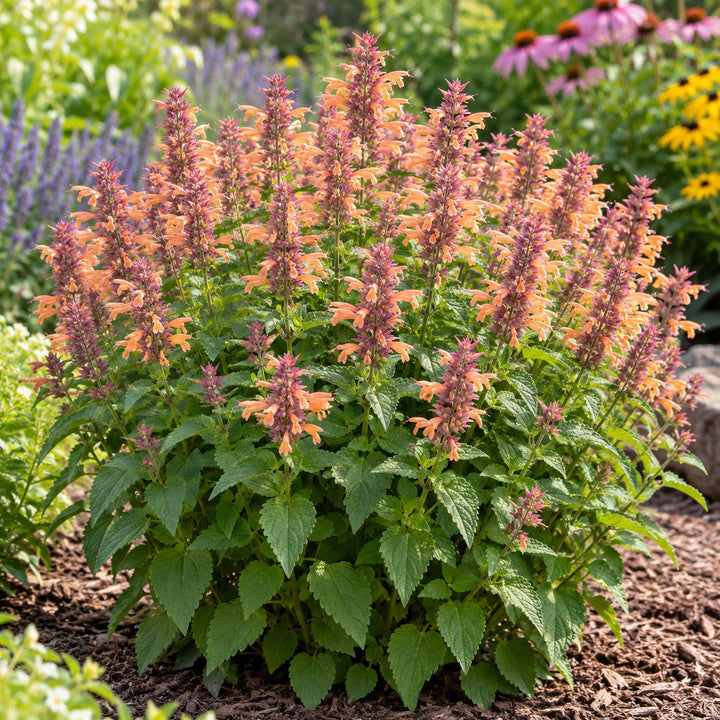
Peachie Keen hummingbird mint is an Agastache that grows into a dense, ball-shaped dome about 2 feet tall and wider than tall. Its 3-to-4-inch spikes of small apricot-peach flowers sit in purplish pink calyxes, giving a peach-and-pink two-tone look. Because the calyxes stay colorful after the petals drop, the plant keeps looking in bloom well into fall.
Brush the bright green leaves and you get a strong licorice-mint scent.
Peachie Keen at a glance
| Trait | What to expect |
|---|---|
| Botanical name | Agastache 'Peachie Keen' |
| Flowers | Apricot peach in purplish pink calyxes, 3 to 4 inch spikes |
| Foliage | Bright green, aromatic, licorice-mint scent |
| Size | 20 to 24 inches tall, 26 to 32 inches wide |
| Bloom | Starts early July, peaks early August, color lasts into fall |
| Hardiness | USDA zones 5 to 9 |
| Light | Full sun |
| Wildlife | Excellent for hummingbirds, butterflies and bees; deer resistant |
A true lavender bedmate
Many companions need a separate bed. Peachie Keen does not. It wants the same hot sun, lean soil and fast drainage as lavender, and it shrugs off heat and drought once rooted. Plant it right among lavender mounds or at the end of a row and the two will get along fine.
It also extends the season. Peachie Keen starts in early July, as the first lavender flush fades, and its colorful calyxes carry on into fall. The apricot and pink dome is a soft, warm contrast to lavender's purple, and the bed stays busy with pollinators all summer. Try combinations in the Companion Plant Planner.
Planting for winter survival
Drainage decides whether hummingbird mint makes it through a Michigan winter. A few habits make a big difference:
- Plant in spring or early summer, not late fall, so roots establish before winter.
- Choose lean, gritty or sandy soil. Wet clay is the most common cause of loss.
- Skip heavy mulch over the crown.
- Leave stems standing until new growth starts in spring, then cut back.
Summer care
- Water: regularly the first season, then only in long dry spells.
- Feeding: none needed; rich soil makes it floppy.
- Air: powdery mildew and leaf spot can appear in crowded, damp spots, so give it room.
Cutting and containers
The spikes rate well as cut flowers and add a peachy accent to lavender bouquets. Its compact dome also suits dry containers; use a gritty mix and a pot with drainage. The 72-cell plug tray is a good fit for pollinator plantings and long borders.
Frequently asked questions
Is it a true mint? Will it spread like one?
No. Hummingbird mint is a clumping perennial, not a running mint, and it stays in a neat dome.
Can I eat the leaves?
The foliage is aromatic, but these hybrids are grown for their flowers, not for eating.

































Share how it went in your field