

Use & Care NotesCompanion Plants
Tutu Blue Siberian Iris: Ruffled Periwinkle Just Before Lavender
 Save
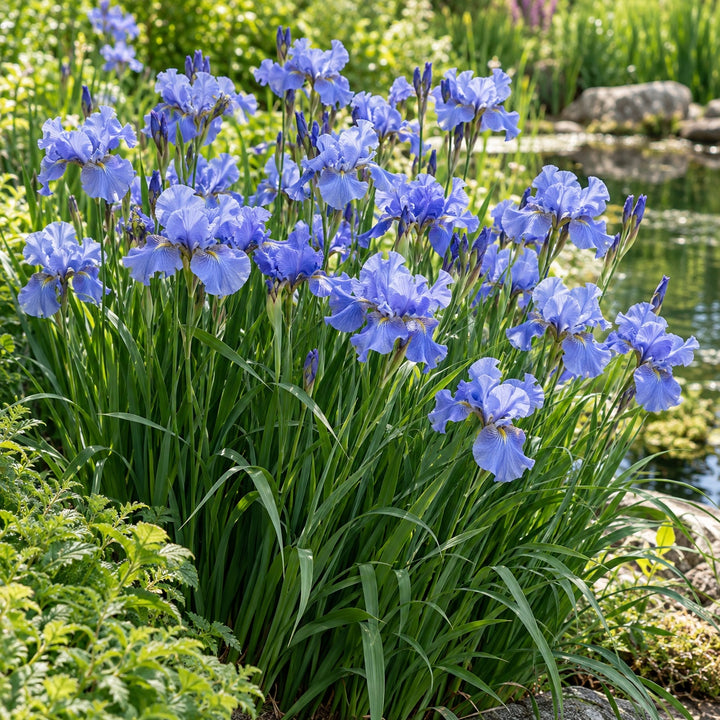
Tutu Blue Siberian iris is an especially vigorous iris with lush, grassy foliage and a heavy crop of ruffled periwinkle blue flowers, many of them open at once. The petals have lightly waved edges and faint darker veining, which is where the ballet name comes from.
It is a lovely opening act for a lavender garden, as long as you give it the damper seat in the house.
Tutu Blue at a glance
| Trait | What to expect |
|---|---|
| Botanical name | Iris sibirica 'Tutu Blue' |
| Flowers | Ruffled periwinkle blue with faint darker veins |
| Foliage | Lush, dense, grass-like mid-green |
| Size | 27 to 32 inches tall, 18 to 24 inches wide |
| Bloom | Early to mid-June, single flush |
| Hardiness | USDA zones 3 to 9 |
| Light | Full sun to part shade |
| Wildlife | Good for pollinators; deer resistant |
Where it sits in a lavender plan
Siberian iris and lavender both love sun, but iris drinks far more. It wants steady moisture through spring and early summer, while lavender wants its roots on the dry side. So rather than mixing them in one bed, place Tutu Blue a few steps away: along the lower edge of a slope where water collects, in a rain garden by the downspout, or in a moister mixed border that faces the lavender.
The timing is the best part. Tutu Blue peaks in mid-June, and English lavender usually starts coloring up right after. Blue-violet iris hands off to purple lavender, so the cool tones run for weeks. After bloom, the grassy upright leaves stay neat and give a fine vertical texture next to lavender's rounded mounds across the way. Sketch it out in the Companion Plant Planner.
Planting the bare root division
- Soil: average to rich, holding moisture. Work in compost if your soil is sandy.
- Depth: set the crown just an inch or two below the soil surface, then water deeply.
- Water: keep it well watered through the season, especially spring and early summer, and soak it in hot, dry spells to keep the foliage fresh.
- Cleanup: cut the foliage back in late fall or early spring.
- Dividing: divide crowded clumps in late summer.
Siberian irises are rarely troubled. Narrow leaves dry fast, so foliar disease is uncommon, and iris borer is much less of a problem than on bearded irises. The main risk is rot in waterlogged soil, so moist is good and swampy is not.
Cutting and a bonus
The flowers cut well; cut stems when the first bud shows color. Tutu Blue is also not bothered by black walnut, which makes it useful in yards where those trees limit your choices.
About the format
Tutu Blue is offered as a bare root plant, ready to set straight into the garden. See the product page for current availability.
Frequently asked questions
Can Tutu Blue grow right beside lavender?
It is better a short distance away. The watering that keeps iris happy will keep lavender too wet.
Does it need winter protection?
No. It is hardy to zone 3, and established clumps need no winter mulch.
Is it safe to have around pets?
Iris rhizomes and leaves can cause stomach upset if eaten, so plant it where pets will not chew it.
















Share how it went in your field