

 Open in the Field Guide
We all need a Savior
“For all have sinned and fall short of the glory of God.”
Romans 3:23 (BSB)
None of us can earn our way to God by being good enough. We all need mercy.
 Field Guide · Plants and flowers
Gaultheria procumbens

The berries have been eaten, but wintergreen oil is highly toxic if swallowed; do not ingest the oil.
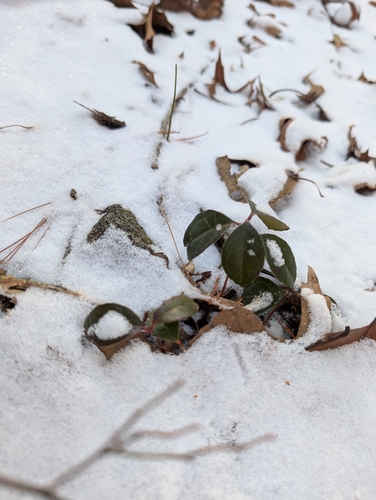
American wintergreen is a low, evergreen shrub that spreads by underground stems. It is native to eastern North America, where it grows in acidic woodland soils.
 How to recognize it
Its glossy, oval leaves smell minty when crushed, and it bears white, bell-shaped flowers followed by red berries. It is much smaller and more ground-hugging than Gaultheria shallon or G. erecta; its leaves are larger than those of G. hispidula and G. myrsinoides.
 When to see it
American Wintergreen is seen most often in Apr, May, Jun, Jul, Aug, Sep, Oct. There are 42147 public records of it worldwide.
 Often recorded near
Public records show American Wintergreen most often in the areas around these farms and places:
Seen one? Point the Lavender Passport Field Guide at it and add your find.
 Questions
It’s seen most often in Apr, May, Jun, Jul, Aug, Sep, Oct.
Public records show it most often around Boyne City Bakery, Cellars of Royal Farms, Chain-O-Lakes Campground, Cafe Sante, Lake Charlevoix Coffee Company.
Its glossy, oval leaves smell minty when crushed, and it bears white, bell-shaped flowers followed by red berries. It is much smaller and more ground-hugging than Gaultheria shallon or G. erecta; its leaves are larger than those of G. hispidula and G. myrsinoides.
The berries have been eaten, but wintergreen oil is highly toxic if swallowed; do not ingest the oil.















You may also like

Here to help while we’re tending the farm