

 Open in the Field Guide
We all need a Savior
“For all have sinned and fall short of the glory of God.”
Romans 3:23 (BSB)
None of us can earn our way to God by being good enough. We all need mercy.
 Field Guide · Plants and flowers
Cytisus scoparius

Its seeds and other parts contain toxic alkaloids, so do not eat it.
Scotch broom is a deciduous shrub native to western and central Europe. In North America it grows in sunny, open places, including roadsides and disturbed areas, and is invasive in some regions.
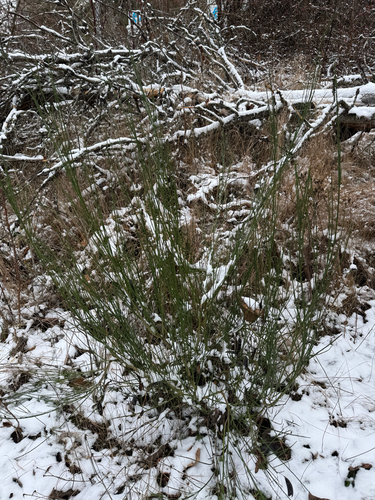
 How to recognize it
Look for green, sharply angled branches, small leaves, and bright yellow, pea-shaped flowers, often marked with brown. It is more upright than the low-growing C. decumbens and usually more compact C. oromediterraneus; C. spinosus has spiny shoots, while C. nigricans has elongated clusters of flowers.
 In lavender fields
Bees visit its flowers, but Scotch broom is invasive in some parts of North America and is not a suitable garden companion there.
 When to see it
Scots Broom is seen most often in Apr, May, Jun, Jul. There are 562190 public records of it worldwide.
 Often recorded near
Public records show Scots Broom most often in the areas around these farms and places:
Seen one? Point the Lavender Passport Field Guide at it and add your find.
 Questions
It’s seen most often in Apr, May, Jun, Jul.
Public records show it most often around Galice Resort, Troon Vineyard, Dutch Bros Coffee, Flery Manor, Japanese.
Look for green, sharply angled branches, small leaves, and bright yellow, pea-shaped flowers, often marked with brown. It is more upright than the low-growing C. decumbens and usually more compact C. oromediterraneus; C. spinosus has spiny shoots, while C. nigricans has elongated clusters of flowers.
Its seeds and other parts contain toxic alkaloids, so do not eat it.















You may also like

Here to help while we’re tending the farm