

 Open in the Field Guide
We all need a Savior
“For all have sinned and fall short of the glory of God.”
Romans 3:23 (BSB)
None of us can earn our way to God by being good enough. We all need mercy.
 Field Guide · Plants and flowers
Mahonia nervosa

Its stiff, spiny leaf edges can scratch skin.
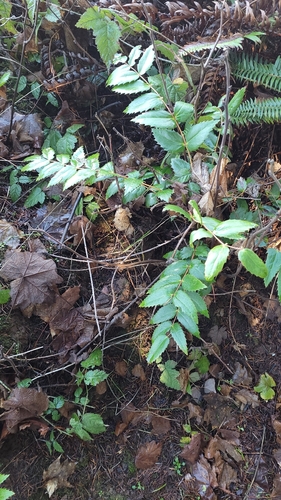
Cascade barberry is a low, evergreen shrub native to western North America, especially the Pacific Northwest. It grows in shady forests and produces yellow flowers in spring followed by blue, berry-like fruits.
 How to recognize it
Its leaves are divided into many narrow, toothed leaflets, and the plant stays low to the ground. Compared with the similar tall Oregon-grape (Mahonia aquifolium), it is smaller and has more leaflets; creeping Oregon-grape (Mahonia repens) usually has fewer.
 In lavender fields
Bees and other pollinators may visit its spring flowers, but it has no special connection to lavender.
 When to see it
Cascade Barberry is seen most often in Apr, May, Jun. There are 26709 public records of it worldwide.
 Often recorded near
Public records show Cascade Barberry most often in the areas around these farms and places:
Seen one? Point the Lavender Passport Field Guide at it and add your find.
 Questions
It’s seen most often in Apr, May, Jun.
Public records show it most often around Ciderworks & Salt Spring Apple Co., Garry Oaks Estate Winery, Lavender & Black, Sacred Mountain Lavender, Salt Spring Brewing Co..
Its leaves are divided into many narrow, toothed leaflets, and the plant stays low to the ground. Compared with the similar tall Oregon-grape (Mahonia aquifolium), it is smaller and has more leaflets; creeping Oregon-grape (Mahonia repens) usually has fewer.
Its stiff, spiny leaf edges can scratch skin.















You may also like

Here to help while we’re tending the farm