

 Open in the Field Guide
We all need a Savior
“For all have sinned and fall short of the glory of God.”
Romans 3:23 (BSB)
None of us can earn our way to God by being good enough. We all need mercy.
 Field Guide · Plants and flowers
Centaurea cyanus
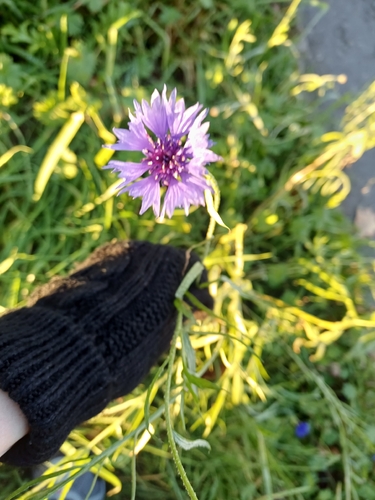
Cornflower, also called bachelor’s button, is an annual flowering plant native to Europe and now grown and found wild in parts of North America. It grows in gardens and disturbed places such as roadsides and fields.
 How to recognize it
Its flower heads are usually bright blue with fringed petals, and its leaves are narrow and gray-green. Unlike the knapweeds listed, which generally have pink or purple flowers, it is usually blue; mountain cornflower can also be blue but is a perennial with broader leaves.
 In lavender fields
Cornflowers in gardens can provide flowers visited by bees and other pollinators, much like lavender.
 When to see it
Cornflower is seen most often in Jun, Jul. There are 217249 public records of it worldwide.
 Often recorded near
Public records show Cornflower most often in the areas around these farms and places:
Seen one? Point the Lavender Passport Field Guide at it and add your find.
 Questions
It’s seen most often in Jun, Jul.
Public records show it most often around Château de la Gabelle, Distillerie Aroma'Plantes, Distillerie du Vallon des Lavandes, Distillerie Les Coulets, GAEC de la Boutonnelle.
Its flower heads are usually bright blue with fringed petals, and its leaves are narrow and gray-green. Unlike the knapweeds listed, which generally have pink or purple flowers, it is usually blue; mountain cornflower can also be blue but is a perennial with broader leaves.















You may also like

Here to help while we’re tending the farm