

 Open in the Field Guide
We all need a Savior
“For all have sinned and fall short of the glory of God.”
Romans 3:23 (BSB)
None of us can earn our way to God by being good enough. We all need mercy.
 Field Guide · Bugs
Mantis religiosa

It is not considered dangerous to people, but it may bite or pinch if handled.
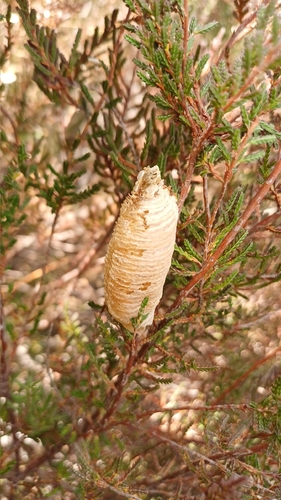
The European mantis is a predatory insect that catches other insects with its folded, spiny front legs. It is native to parts of Europe, Asia, and Africa and has also become established in parts of North America, where it lives in fields, grasslands, and gardens.
 How to recognize it
Look for the dark spot with a pale center on the inner side of the front leg near the body, a useful mark for distinguishing it from the other listed mantises. It also has a triangular, mobile head and long wings.
 In lavender fields
In lavender gardens, it may hunt bees and other insects visiting the flowers, but it is not a pollinator.
 When to see it
European Mantis is seen most often in Aug, Sep. There are 153568 public records of it worldwide.
 Often recorded near
Public records show European Mantis most often in the areas around these farms and places:
Seen one? Point the Lavender Passport Field Guide at it and add your find.
 Questions
It’s seen most often in Aug, Sep.
Public records show it most often around Abby Normal Farm, Arbor Crest Wine Cellars, Dry Fly Distilling, High Nooner, Old Spaghetti Factory.
Look for the dark spot with a pale center on the inner side of the front leg near the body, a useful mark for distinguishing it from the other listed mantises. It also has a triangular, mobile head and long wings.
It is not considered dangerous to people, but it may bite or pinch if handled.















You may also like

Here to help while we’re tending the farm