

 Open in the Field Guide
We all need a Savior
“For all have sinned and fall short of the glory of God.”
Romans 3:23 (BSB)
None of us can earn our way to God by being good enough. We all need mercy.
 Field Guide · Plants and flowers
Galium aparine

Its hooked hairs can feel scratchy and may irritate sensitive skin, but it is not known as a poisonous plant.
Catchweed bedstraw is a fast-growing annual in the coffee family that sprawls over other plants. It grows in fields, gardens, woodland edges, and other disturbed places across much of North America.
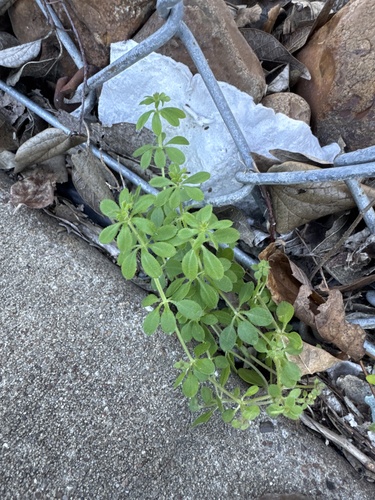
 How to recognize it
Its narrow leaves grow in whorls around weak, square stems covered with tiny hooked hairs that make the plant cling to clothing and fur; it has small white flowers and fruits with hooked bristles. Unlike yellow-flowered Galium verum, wetland-growing G. palustre, larger-flowered G. mollugo, or fragrant, shade-growing G. odoratum, it is notably sticky and clinging.
 In lavender fields
It can grow as a scrambling weed in garden beds, including among lavender.
 When to see it
Catchweed Bedstraw is seen most often in Apr, May, Jun, Jul. There are 1225144 public records of it worldwide.
 Often recorded near
Public records show Catchweed Bedstraw most often in the areas around these farms and places:
Seen one? Point the Lavender Passport Field Guide at it and add your find.
 Questions
It’s seen most often in Apr, May, Jun, Jul.
Public records show it most often around Castle Farm Midford, Farrington's Farm, Hartley Farm Shop & Kitchen, Newton Farm Foods, Somerset Lavender.
Its narrow leaves grow in whorls around weak, square stems covered with tiny hooked hairs that make the plant cling to clothing and fur; it has small white flowers and fruits with hooked bristles. Unlike yellow-flowered Galium verum, wetland-growing G. palustre, larger-flowered G. mollugo, or fragrant, shade-growing G. odoratum, it is notably sticky and clinging.
Its hooked hairs can feel scratchy and may irritate sensitive skin, but it is not known as a poisonous plant.















You may also like

Here to help while we’re tending the farm