

 Open in the Field Guide
We all need a Savior
“For all have sinned and fall short of the glory of God.”
Romans 3:23 (BSB)
None of us can earn our way to God by being good enough. We all need mercy.
 Field Guide · Plants and flowers
Heracleum mantegazzianum

Its sap can cause severe skin burns and blistering when exposed to sunlight, and getting sap in the eyes can cause serious injury.
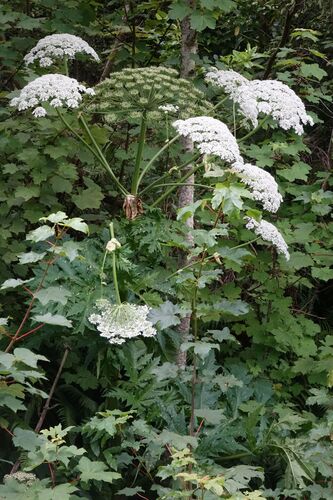
Giant hogweed is a tall, nonnative member of the carrot family, originally from the Caucasus region. In North America it grows in some areas, often in moist disturbed places such as roadsides, stream banks, and fields.
 How to recognize it
It can grow 7 to 14 feet tall, with very large, deeply lobed leaves and a thick stem marked with purple blotches and coarse hairs; its small white flowers grow in broad, umbrella-shaped clusters. It is generally much larger than common hogweed or Austrian hogweed, but it can resemble cow parsnip and the closely related Sosnowsky’s hogweed, so size and stem markings alone may not be enough to ident
 When to see it
Giant Hogweed is seen most often in May, Jun, Jul. There are 251095 public records of it worldwide.
 Often recorded near
Public records show Giant Hogweed most often in the areas around these farms and places:
Seen one? Point the Lavender Passport Field Guide at it and add your find.
 Questions
It’s seen most often in May, Jun, Jul.
Public records show it most often around Drift, Farm Shop at The Mart, NB Distillery, The Bus Stop at Bankrugg Farm, Carfrae Farm Shop.
It can grow 7 to 14 feet tall, with very large, deeply lobed leaves and a thick stem marked with purple blotches and coarse hairs; its small white flowers grow in broad, umbrella-shaped clusters. It is generally much larger than common hogweed or Austrian hogweed, but it can resemble cow parsnip and the closely related Sosnowsky’s hogweed, so size and stem markings alone may not be enough to ident
Its sap can cause severe skin burns and blistering when exposed to sunlight, and getting sap in the eyes can cause serious injury.















You may also like

Here to help while we’re tending the farm