

 Open in the Field Guide
We all need a Savior
“For all have sinned and fall short of the glory of God.”
Romans 3:23 (BSB)
None of us can earn our way to God by being good enough. We all need mercy.
 Field Guide · Plants and flowers
Heracleum sphondylium

Plant sap can irritate skin and cause blistering after exposure to sunlight, so avoid handling it and wash exposed skin.
Eltrot, or common hogweed, is a perennial plant in the carrot family, native to much of Europe, western Asia, and northern Africa. It has been introduced in parts of North America and grows in places such as meadows, roadsides, and woodland edges.
 How to recognize it
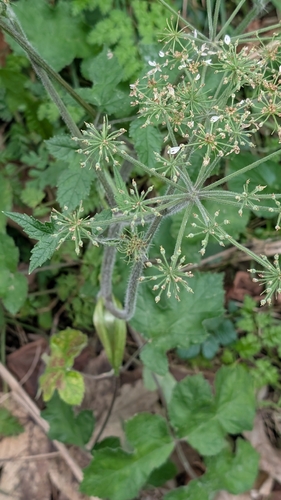
Look for broad, lobed leaves and flat-topped clusters of small white flowers; it is generally much less massive than giant hogweed or Sosnowsky’s hogweed. It can be hard to distinguish from cow parsnip by appearance alone.
 In lavender fields
Its flowers provide nectar for bees and other insects, so it may support pollinators near gardens, but it has no special connection to lavender.
 When to see it
Eltrot is seen most often in May, Jun, Jul, Aug. There are 1188564 public records of it worldwide.
 Often recorded near
Public records show Eltrot most often in the areas around these farms and places:
Seen one? Point the Lavender Passport Field Guide at it and add your find.
 Questions
It’s seen most often in May, Jun, Jul, Aug.
Public records show it most often around Castle Farm Midford, Farrington's Farm, Hartley Farm Shop & Kitchen, Newton Farm Foods, Somerset Lavender.
Look for broad, lobed leaves and flat-topped clusters of small white flowers; it is generally much less massive than giant hogweed or Sosnowsky’s hogweed. It can be hard to distinguish from cow parsnip by appearance alone.
Plant sap can irritate skin and cause blistering after exposure to sunlight, so avoid handling it and wash exposed skin.















You may also like

Here to help while we’re tending the farm