

 Open in the Field Guide
We all need a Savior
“For all have sinned and fall short of the glory of God.”
Romans 3:23 (BSB)
None of us can earn our way to God by being good enough. We all need mercy.
 Field Guide · Plants and flowers
Carya ovata

Its nuts may cause reactions in people with tree-nut allergies.
Shagbark hickory is a large, deciduous tree native to eastern North America. It grows in a range of forests, often on well-drained soils, and produces nuts eaten by wildlife.
 How to recognize it
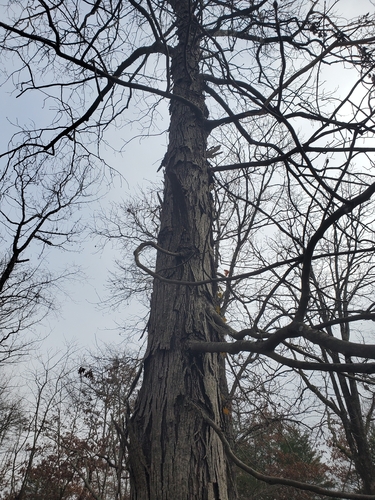
Its most distinctive feature is mature bark that peels away in long, loose strips; its leaves usually have five leaflets. This shaggy bark sets it apart from the smoother-barked pignut and bitternut hickories, while its leaflets are generally broader than pecan’s.
 When to see it
Shagbark Hickory is seen most often in Apr, May, Jun, Jul, Aug, Sep. There are 23506 public records of it worldwide.
 Often recorded near
Public records show Shagbark Hickory most often in the areas around these farms and places:
Seen one? Point the Lavender Passport Field Guide at it and add your find.
 Questions
It’s seen most often in Apr, May, Jun, Jul, Aug, Sep.
Public records show it most often around À la Croisée des Pommes, Asteur, Cidrerie Lacroix, Intermiel, La Lavandoise.
Its most distinctive feature is mature bark that peels away in long, loose strips; its leaves usually have five leaflets. This shaggy bark sets it apart from the smoother-barked pignut and bitternut hickories, while its leaflets are generally broader than pecan’s.
Its nuts may cause reactions in people with tree-nut allergies.















You may also like

Here to help while we’re tending the farm