

 Open in the Field Guide
We all need a Savior
“For all have sinned and fall short of the glory of God.”
Romans 3:23 (BSB)
None of us can earn our way to God by being good enough. We all need mercy.
 Field Guide · Plants and flowers
Cylindropuntia imbricata

Its spines and tiny barbed bristles can stick painfully to skin and clothing, so avoid touching it.
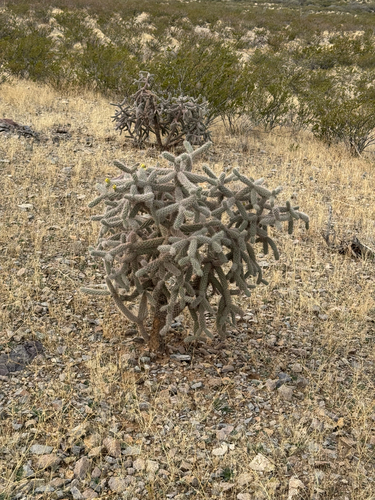
Cane cholla is an upright, branching cactus native to the southwestern United States and northern Mexico. It grows in dry areas, including desert scrub and grasslands, and can become shrub-like or tree-like with age.
 How to recognize it
Look for thick, cylindrical stem segments covered in long spines, often growing from a woody trunk; yellowish fruits may remain on the plant. It is much more robust and heavily spined than the slender-stemmed pencil cholla (Cylindropuntia leptocaulis).
 When to see it
Cane Cholla is seen most often in Apr, May, Jun. There are 29654 public records of it worldwide.
 Often recorded near
Public records show Cane Cholla most often in the areas around these farms and places:
Seen one? Point the Lavender Passport Field Guide at it and add your find.
 Questions
It’s seen most often in Apr, May, Jun.
Public records show it most often around Golden Crown Panaderia, Gruet Winery, Los Poblanos Historic Inn & Organic Farm, Sandhill Crane Bed and Breakfast, Statewide Products.
Look for thick, cylindrical stem segments covered in long spines, often growing from a woody trunk; yellowish fruits may remain on the plant. It is much more robust and heavily spined than the slender-stemmed pencil cholla (Cylindropuntia leptocaulis).
Its spines and tiny barbed bristles can stick painfully to skin and clothing, so avoid touching it.















You may also like

Here to help while we’re tending the farm