

 Open in the Field Guide
We all need a Savior
“For all have sinned and fall short of the glory of God.”
Romans 3:23 (BSB)
None of us can earn our way to God by being good enough. We all need mercy.
 Field Guide · Pollinators
Polyommatus icarus
The Common Blue is a small butterfly native to much of Europe, North Africa, and temperate Asia, and it has also been introduced to parts of North America. It lives in open grassy places such as meadows, roadsides, and gardens; its caterpillars feed on legume plants.
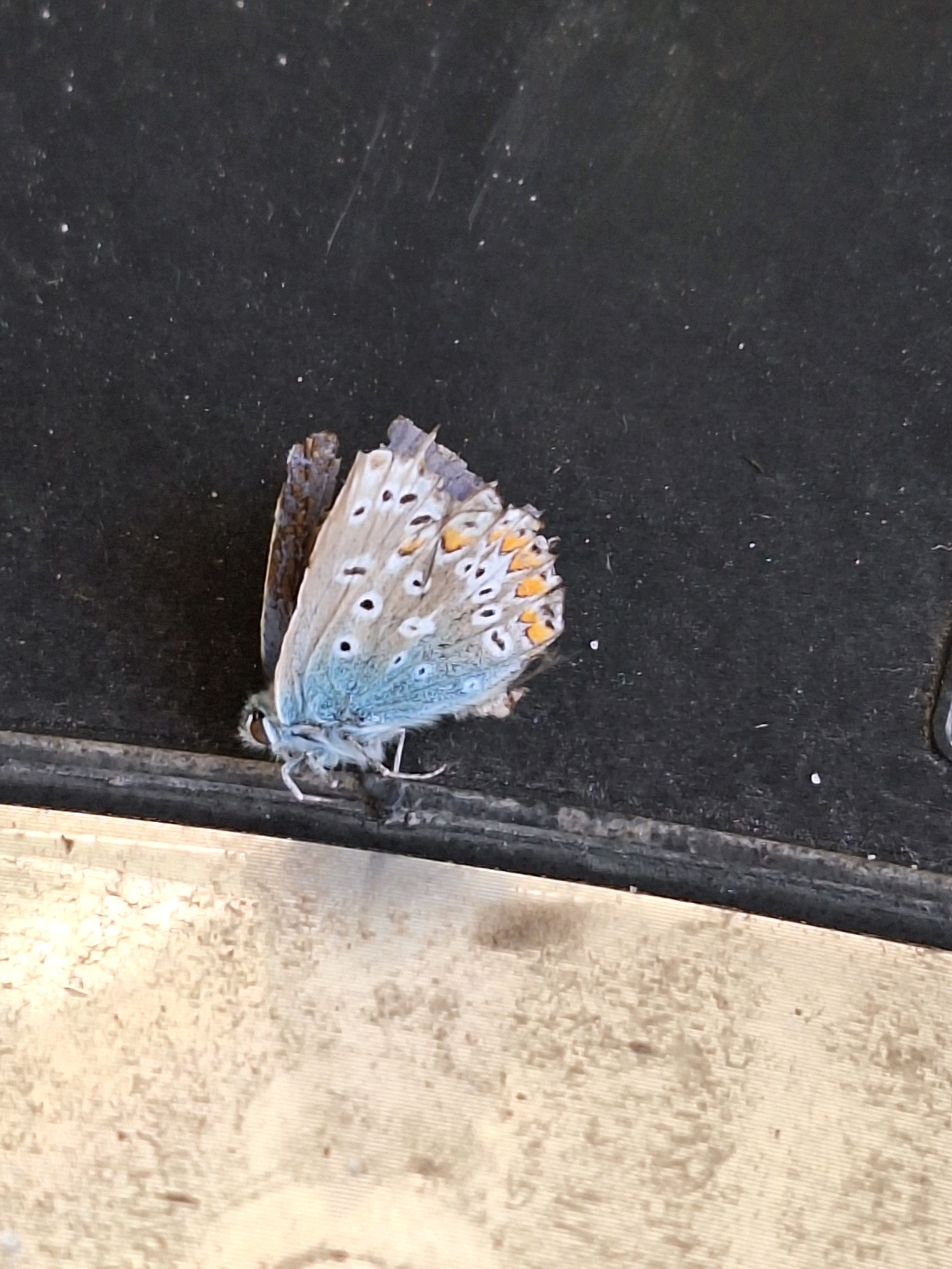
 How to recognize it
Males are usually blue above with dark borders, while females are often brown with some blue and orange spots. On the underside, its orange markings and small basal spots on the forewing help distinguish it from the similar Escher’s Blue (Polyommatus thersites), which lacks those basal spots.
 In lavender fields
Adults may visit lavender for nectar where their ranges overlap, but lavender is not a caterpillar food plant.
 When to see it
Common Blue is seen most often in Jul, Aug. There are 2468168 public records of it worldwide.
 Often recorded near
Public records show Common Blue most often in the areas around these farms and places:
Seen one? Point the Lavender Passport Field Guide at it and add your find.
 Questions
It’s seen most often in Jul, Aug.
Public records show it most often around À la Croisée des Pommes, Asteur, Cidrerie Lacroix, Intermiel, La Lavandoise.
Males are usually blue above with dark borders, while females are often brown with some blue and orange spots. On the underside, its orange markings and small basal spots on the forewing help distinguish it from the similar Escher’s Blue (Polyommatus thersites), which lacks those basal spots.















You may also like

Here to help while we’re tending the farm