

 Open in the Field Guide
We all need a Savior
“For all have sinned and fall short of the glory of God.”
Romans 3:23 (BSB)
None of us can earn our way to God by being good enough. We all need mercy.
 Field Guide · Reptiles and amphibians
Dryophytes chrysoscelis

Its skin secretions may irritate the eyes or sensitive skin, so wash your hands after handling it and avoid touching your face.
Cope’s gray treefrog is a small, nocturnal treefrog found in parts of the eastern and central United States and southeastern Canada. It lives mainly in wooded areas and breeds in ponds and other still-water habitats.
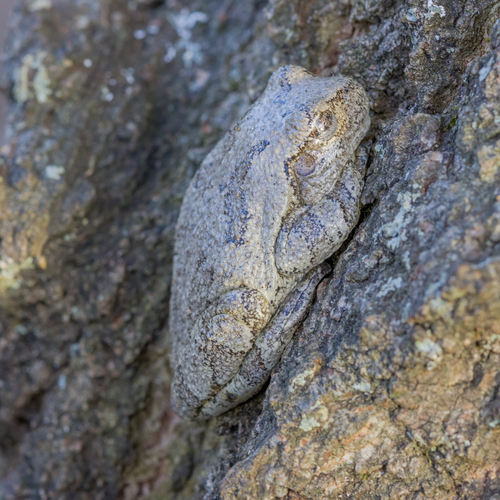
 How to recognize it
It is usually mottled gray or gray-green, with bright yellow-orange coloring on the inner thighs that shows when it jumps. It closely resembles the gray treefrog; their calls are the clearest way to tell them apart, with Cope’s call faster and slightly higher-pitched.
 In lavender fields
It may visit gardens near wooded habitat to feed on insects, but it has no special relationship with lavender.
 When to see it
Cope's Gray Treefrog is seen most often in May, Jun, Jul. There are 29749 public records of it worldwide.
 Often recorded near
Public records show Cope's Gray Treefrog most often in the areas around these farms and places:
Seen one? Point the Lavender Passport Field Guide at it and add your find.
 Questions
It’s seen most often in May, Jun, Jul.
Public records show it most often around Arrowhead Inn, La Farm Bakery, Lavender Oaks Farm, The Rosemary House, Chapel Hill Restaurant.
It is usually mottled gray or gray-green, with bright yellow-orange coloring on the inner thighs that shows when it jumps. It closely resembles the gray treefrog; their calls are the clearest way to tell them apart, with Cope’s call faster and slightly higher-pitched.
Its skin secretions may irritate the eyes or sensitive skin, so wash your hands after handling it and avoid touching your face.















You may also like

Here to help while we’re tending the farm