

 Open in the Field Guide
We all need a Savior
“For all have sinned and fall short of the glory of God.”
Romans 3:23 (BSB)
None of us can earn our way to God by being good enough. We all need mercy.
 Field Guide · Plants and flowers
Cirsium arvense

Its sharp leaf spines can prick skin.
Creeping thistle is a perennial plant native to Europe and parts of Asia and North Africa, and introduced in North America. It grows in open, disturbed places such as fields, roadsides, and pastures, spreading through creeping roots as well as seeds.
 How to recognize it
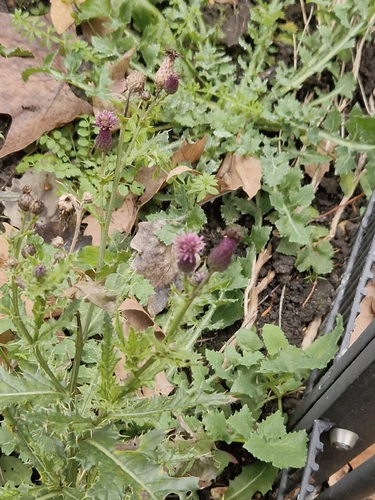
Look for clusters of small pink to purple flower heads and spiny leaves; its stems usually lack the spiny wings seen on bull thistle (Cirsium vulgare). The clustered heads also help distinguish it from species such as marsh thistle and elk thistle, which typically have larger, less clustered heads.
 In lavender fields
It can be a troublesome weed in fields and disturbed ground, while its flowers are visited by bees and other insects; it has no special relationship with lavender.
 When to see it
Creeping Thistle is seen most often in Jun, Jul, Aug. There are 1659849 public records of it worldwide.
 Often recorded near
Public records show Creeping Thistle most often in the areas around these farms and places:
Seen one? Point the Lavender Passport Field Guide at it and add your find.
 Questions
It’s seen most often in Jun, Jul, Aug.
Public records show it most often around Church Farm Ardeley, Mentley Farm Lavender, Pearce's Farmshop & Cafe, Six Hills Brewing, Graveley Fruit Farm.
Look for clusters of small pink to purple flower heads and spiny leaves; its stems usually lack the spiny wings seen on bull thistle (Cirsium vulgare). The clustered heads also help distinguish it from species such as marsh thistle and elk thistle, which typically have larger, less clustered heads.
Its sharp leaf spines can prick skin.















You may also like

Here to help while we’re tending the farm