

 Open in the Field Guide
We all need a Savior
“For all have sinned and fall short of the glory of God.”
Romans 3:23 (BSB)
None of us can earn our way to God by being good enough. We all need mercy.
 Field Guide · Mushrooms
Amanita muscaria

Eating fly agaric can cause poisoning, including vomiting, confusion, and altered perception; do not eat it.
Fly agaric is a large mushroom that forms partnerships with tree roots. It grows mainly in temperate and boreal forests of the Northern Hemisphere, often near conifers or birches.
 How to recognize it
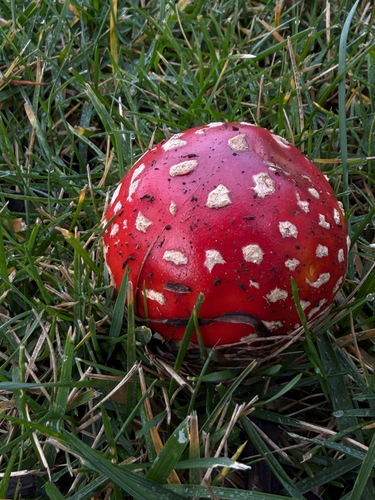
It has a usually red cap with white warts, white gills, and a ring on its stem. Unlike the listed Amanita species, it is typically bright red rather than reddish-brown, orange-brown, pale yellow, or olive-green.
 When to see it
Fly Agaric is seen most often in Oct. There are 332152 public records of it worldwide.
 Often recorded near
Public records show Fly Agaric most often in the areas around these farms and places:
Seen one? Point the Lavender Passport Field Guide at it and add your find.
 Questions
It’s seen most often in Oct.
Public records show it most often around Battaglini Estate Winery, David Coffaro Vineyard, Dry Creek Vineyard, Frick Wine Store, Hook & Ladder Winery.
It has a usually red cap with white warts, white gills, and a ring on its stem. Unlike the listed Amanita species, it is typically bright red rather than reddish-brown, orange-brown, pale yellow, or olive-green.
Eating fly agaric can cause poisoning, including vomiting, confusion, and altered perception; do not eat it.















You may also like

Here to help while we’re tending the farm