

 Open in the Field Guide
We all need a Savior
“For all have sinned and fall short of the glory of God.”
Romans 3:23 (BSB)
None of us can earn our way to God by being good enough. We all need mercy.
 Field Guide · Plants and flowers
Baccharis halimifolia

Do not eat it; groundsel tree can be toxic to livestock.
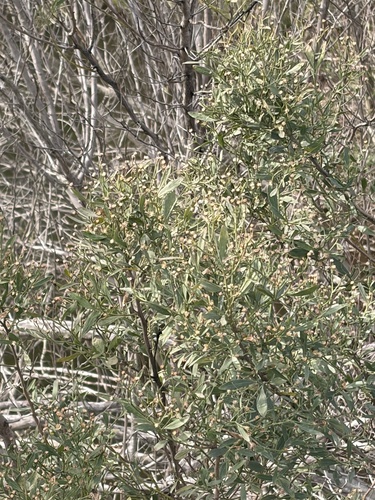
Groundsel tree is a woody shrub native to eastern and southern North America, parts of Mexico, and the Caribbean. It grows especially in coastal wetlands, salt-marsh edges, and other salty or brackish habitats.
 How to recognize it
Look for toothed, broadly oval leaves and, in fall, clusters of small flowers or fluffy white seed heads. Compared with the listed species, it has broader leaves than willow baccharis, leafy rather than broomlike stems, and lacks the conspicuous three-veined leaves of Baccharis trinervis; coyote brush is usually evergreen and western.
 In lavender fields
Its fall flowers are visited by bees and other insects, so the shrub can provide a late-season pollinator resource near a lavender garden.
 When to see it
Groundsel Tree is seen most often in Oct. There are 45632 public records of it worldwide.
 Often recorded near
Public records show Groundsel Tree most often in the areas around these farms and places:
Seen one? Point the Lavender Passport Field Guide at it and add your find.
 Questions
It’s seen most often in Oct.
Public records show it most often around Baywood Clubhouse Restaurant, Big Fish Grill, Lavender Fields at Warrington Manor, Notting Hill Coffee Roastery, Canalside Inn Rehoboth.
Look for toothed, broadly oval leaves and, in fall, clusters of small flowers or fluffy white seed heads. Compared with the listed species, it has broader leaves than willow baccharis, leafy rather than broomlike stems, and lacks the conspicuous three-veined leaves of Baccharis trinervis; coyote brush is usually evergreen and western.
Do not eat it; groundsel tree can be toxic to livestock.















You may also like

Here to help while we’re tending the farm