

 Open in the Field Guide
We all need a Savior
“For all have sinned and fall short of the glory of God.”
Romans 3:23 (BSB)
None of us can earn our way to God by being good enough. We all need mercy.
 Field Guide · Birds
Passer domesticus
The house sparrow is a small, social songbird native to much of Europe and Asia and introduced across many other regions, including North America. It commonly lives near people in towns, farms, and parks, where it nests in buildings and other sheltered spots.
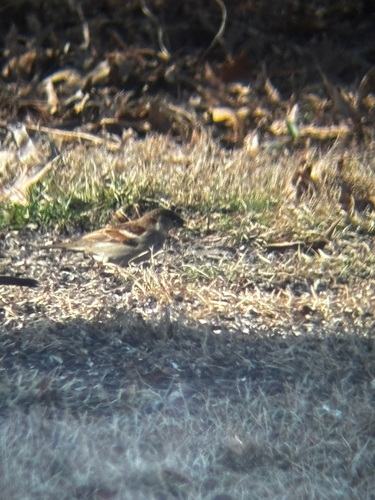
 How to recognize it
Males have a gray crown, black bib, and chestnut-brown markings; females are plainer brown with a pale eyebrow. Unlike the Eurasian tree sparrow, it lacks a black cheek spot, and the other listed sparrows generally have different head patterns or coloring.
 When to see it
House Sparrow is seen most often in Jan, Feb, Mar, Apr, May, Jun. There are 26305082 public records of it worldwide.
 Often recorded near
Public records show House Sparrow most often in the areas around these farms and places:
Seen one? Point the Lavender Passport Field Guide at it and add your find.
 Questions
It’s seen most often in Jan, Feb, Mar, Apr, May, Jun.
Public records show it most often around B Honey, Bloomfield Schoolhouse Lavender Farm & Apothecary, Blue Gate Restaurant, Cook's Bison Ranch, Dutch Creek Animal Farm.
Males have a gray crown, black bib, and chestnut-brown markings; females are plainer brown with a pale eyebrow. Unlike the Eurasian tree sparrow, it lacks a black cheek spot, and the other listed sparrows generally have different head patterns or coloring.















You may also like

Here to help while we’re tending the farm